
By Conor Brandt, Content Coordinator
One of our favorite things to do at the Museum is show off the unique objects and artifacts our archaeologists and community divers have collected over the years. We do that by sharing the stories of the people who made and used them with the public. And yet, the downside to being a museum is that we will always have more objects stored in our collections than we could ever show off in an exhibit!
So, we are opening the vaults and giving you a behind-the-scenes look at some of our favorite items in our collections in a new blog series, “Lost & Found.” We’ll share stories behind these objects, why we find them so interesting, and more.
This week, in our inaugural blog, we will explore three objects discovered underwater in Valcour Bay—the site of a climactic battle between the British and Patriot forces during the American Revolution on Lake Champlain—and see what they can tell us about the lives of those who used them.
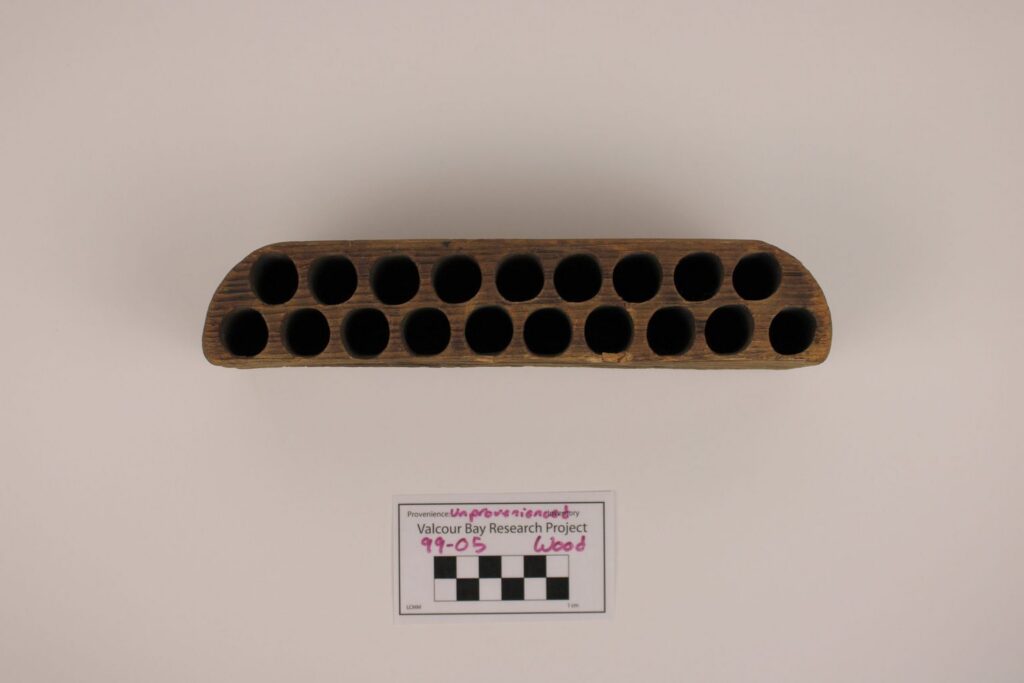
Revolutionary War Cartridge Box Assemblage
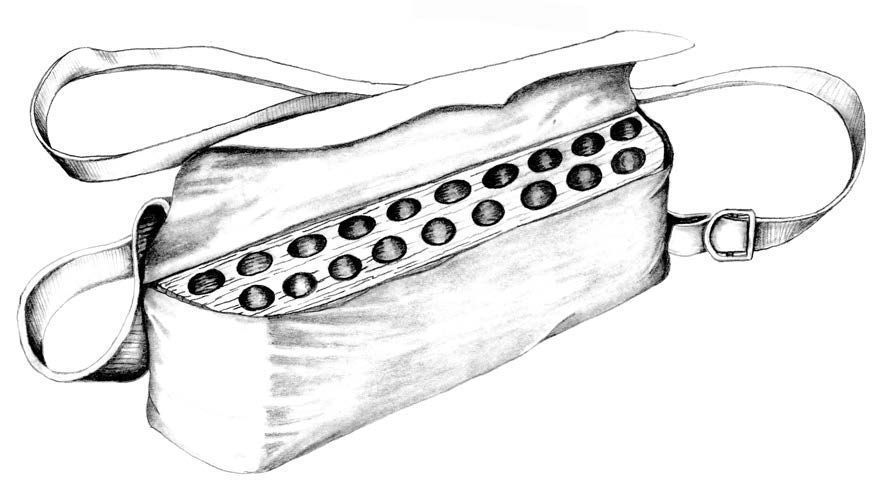
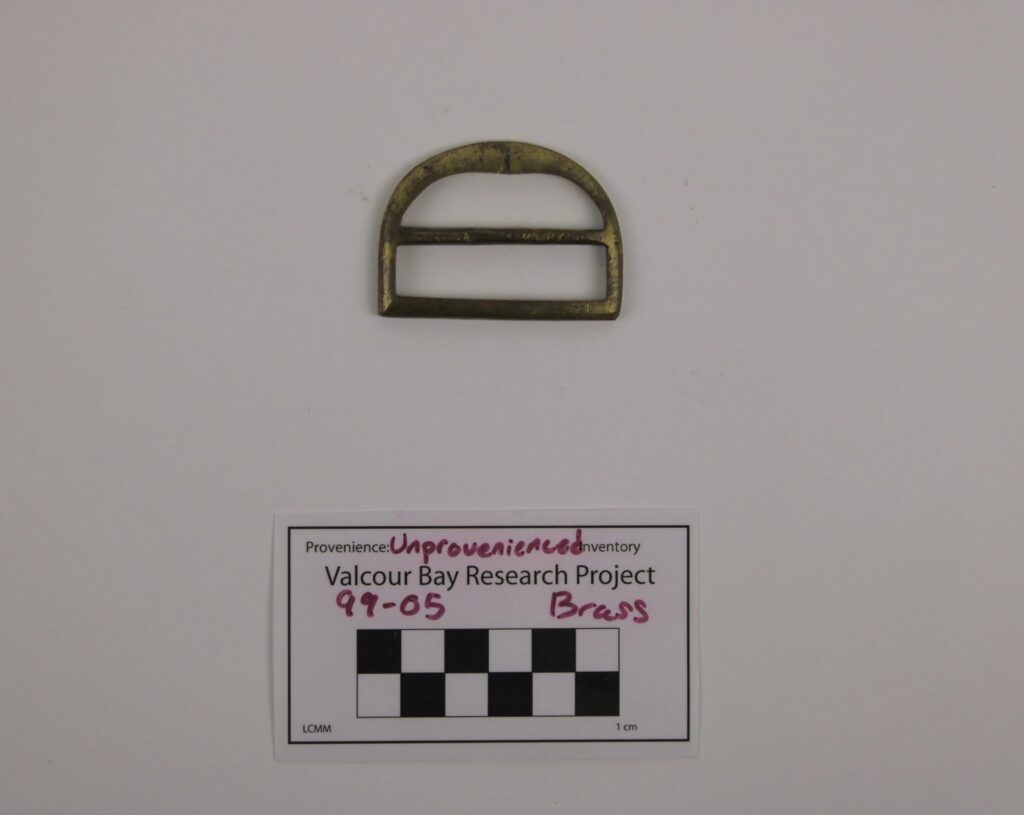
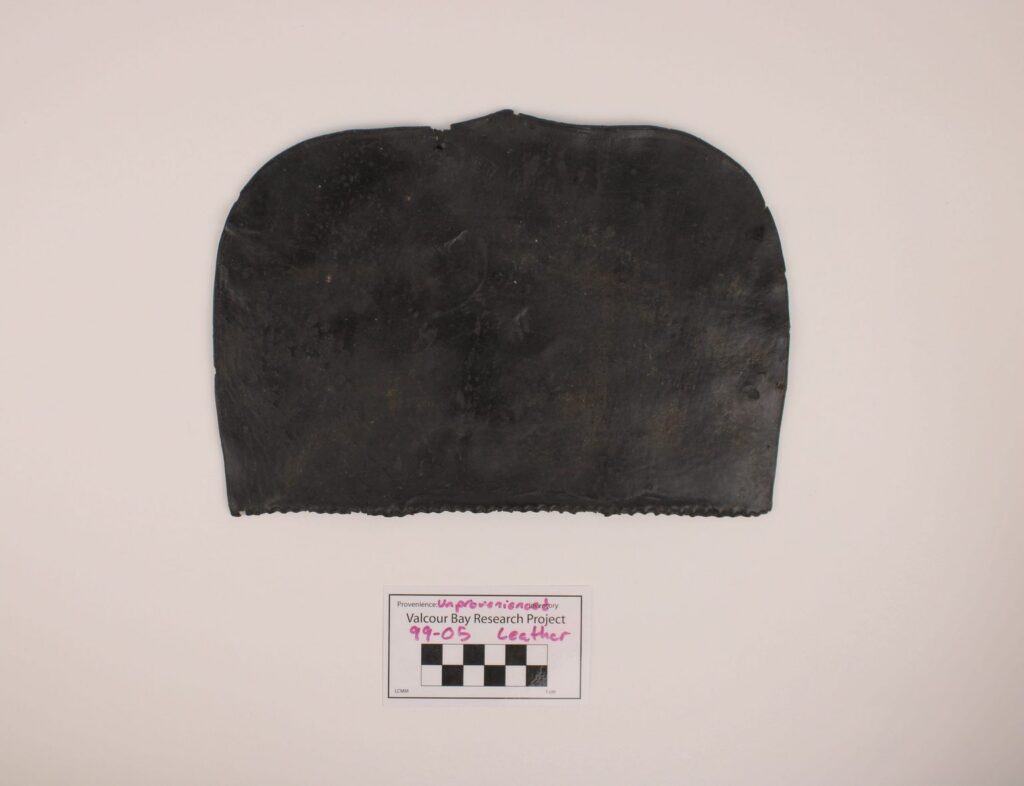
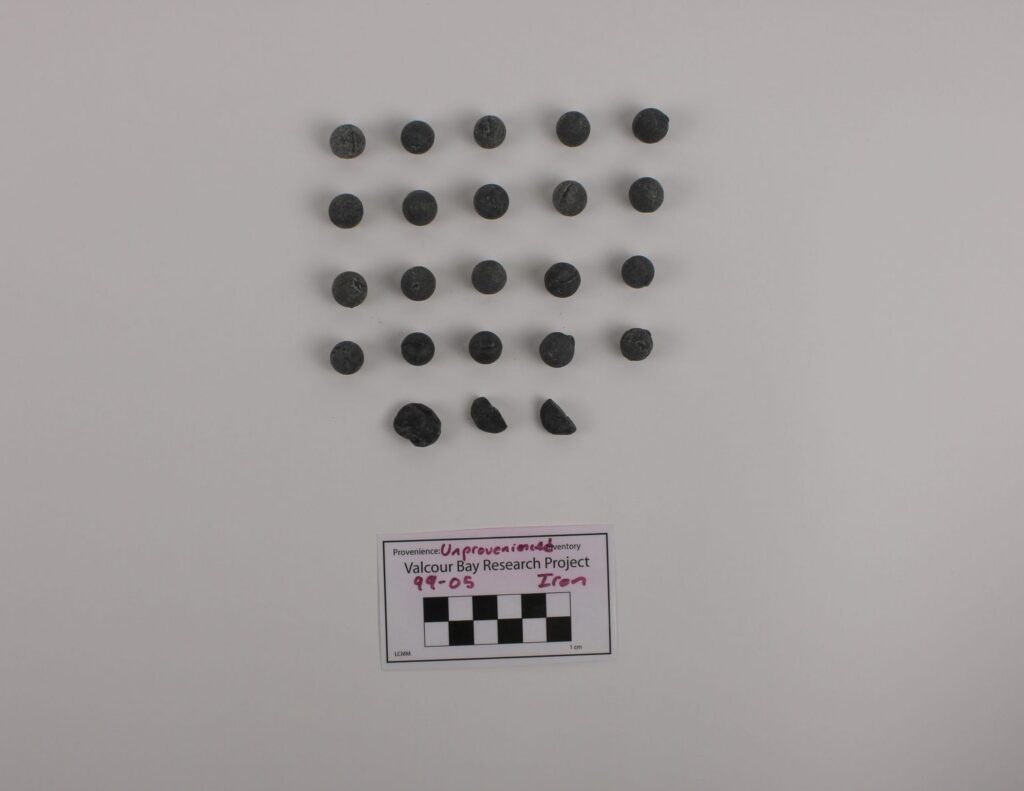
Take a look at this wooden cartridge box assemblage that divers recovered during the Valcour Bay Research Project in 1999. One of our favorite aspects of this box is the condition it was found in—still intact, with a leather flap and a buckle. Inside the box were 23 musket balls alongside seven pieces of gun flint.
This cartridge box had a very important job for a soldier fighting in the American Revolution on Lake Champlain: it kept their ammunition dry. Into the holes in the wooden block a soldier would have stored musket balls and a premeasured amount of gunpowder wrapped in paper, called a cartridge. These premeasured packages made it easier for the soldier to load their musket. The leather flap protected the cartridges from moisture and prevented any musket fire sparks from getting into the block with the measured gunpowder.
Based on the location on the lake bottom where this artifact was recovered, and the size of the musket balls found inside, we are fairly confident that the cartridge box belonged to a Patriot soldier. It would have been one of their most important possessions. We don’t know whether it was dropped or blown off a Patriot vessel during the fight, but its loss would have been disastrous for the soldier—they had lost much of their ability to protect themselves in close combat
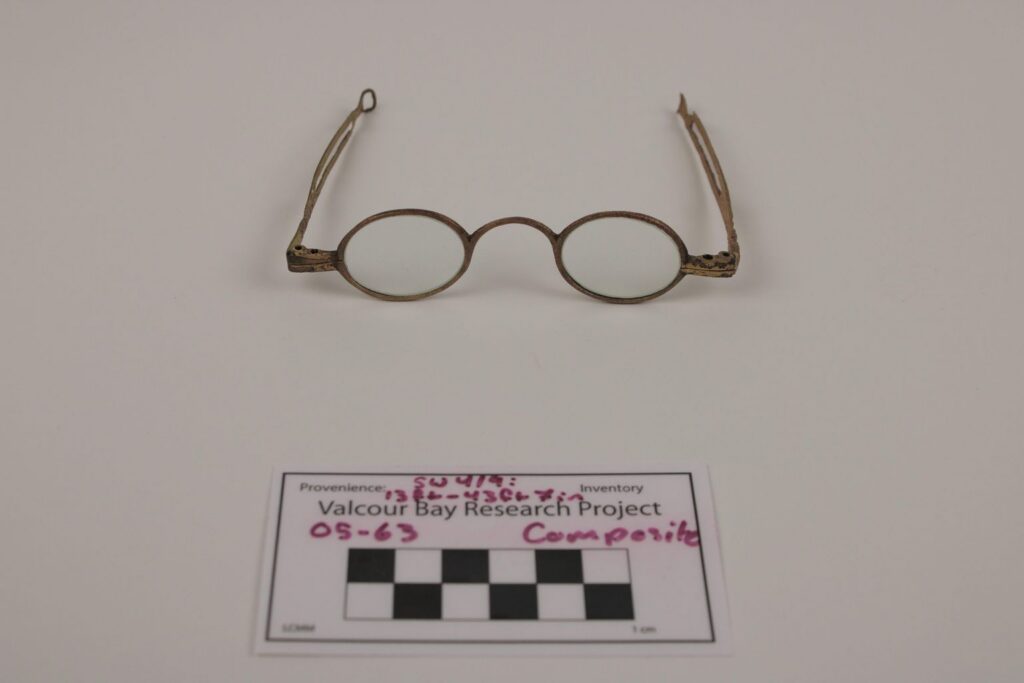
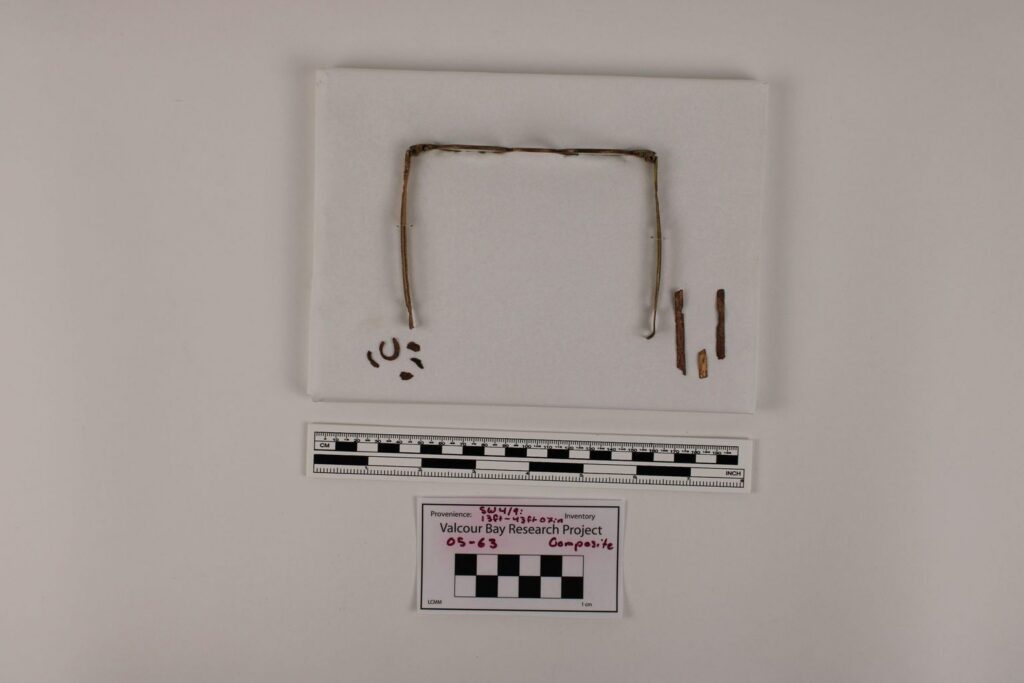
Sliding Spectacles
The next object we want to highlight might have been even more important to its owner than a cartridge box. Take a moment to look at this pair of eyeglasses made from copper and glass. These spectacles would have been one of only a few personal items a soldier had with them as they sailed into battle.
One of the unique aspects of these spectacles is the impressive condition they are in, despite sinking to the bottom of Lake Champlain. They also have another particularly interesting characteristic. The temples of the glasses could slide, allowing them to fit within a smaller carrying case. This would have allowed the owner of the glasses to slip them into a pocket or pouch and more easily carry them.
As these glasses, like the other objects we are looking at today, were found at Valcour Bay, it is possible the owner lost them in the middle of the battle. That said, sliding spectacles of this type weren’t particularly common in 1776, and may have been lost by someone on another ship that passed through Valcour Bay years later.
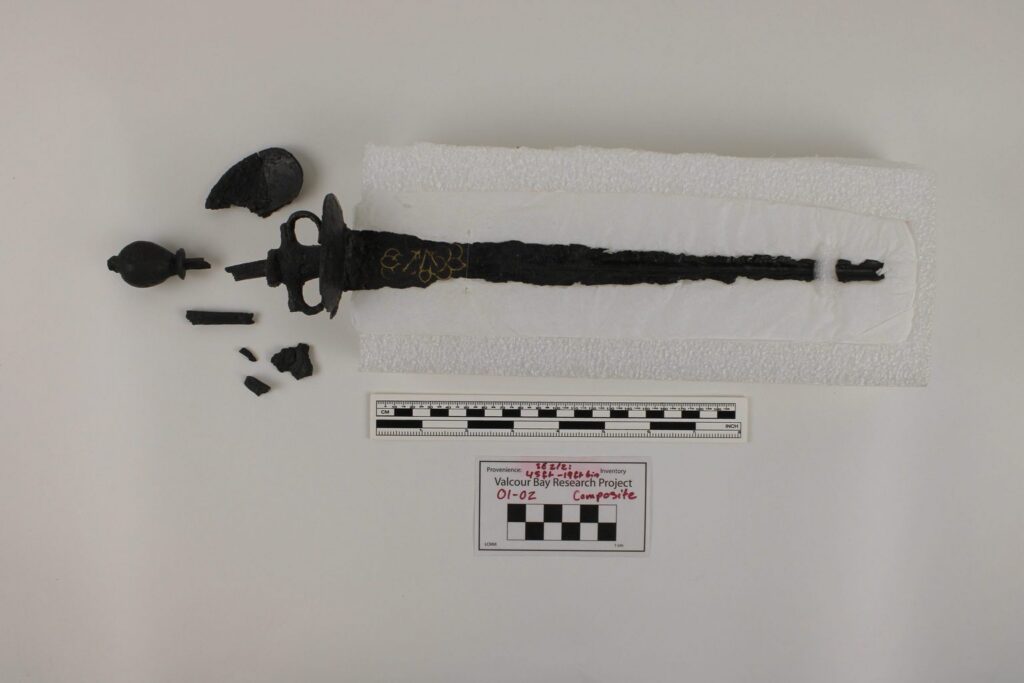
Patriot Soldier’s Sword
The final object we want to highlight today are the portions of a small sword that we believe belonged to a Patriot soldier. Take a look at the pieces recovered; we can easily identify the pommel of the sword, most of the blade, part of the scabbard, and even something called the “frog”—a piece of brass that would have secured a soldier’s sword to their belt. While the frog is normally fastened to the leather scabbard of a sword, this one was found wired to the naked blade of the weapon—apparently no scabbard was available!
This sword gives us insight into the experience of Patriot soldiers who fought on Lake Champlain in 1776. The lack of a scabbard on this sword is just one indication of the nature of the Patriot fleet at this time. At Valcour Bay, soldiers were hastily armed, having come to battle with weapons they had available at home, regardless of their condition. Standard military issued personal arms and uniforms didn’t become commonplace until years later, after French involvement in the American Revolution became more overt.
Thanks for exploring some of our favorite items in our collections with us!
Some of these objects are currently on view in our exhibit, Fragments: Voices of the American Revolution on Lake Champlain. If you would like to take a closer look at these three objects, or any other objects in our collections, follow the links below to explore our digitized collections where we have archived many more stories!
- Link to the cartridge box: https://hub.catalogit.app/lake-champlain-maritime-museum/folder/valcour-bay-research-project/entry/cartridge-box
- Link to the spectacles: https://hub.catalogit.app/lake-champlain-maritime-museum/folder/valcour-bay-research-project/entry/spectacles
- Link to the sword: https://hub.catalogit.app/lake-champlain-maritime-museum/folder/valcour-bay-research-project/entry/small-sword
- Link to all our digitized collections: https://hub.catalogit.app/lake-champlain-maritime-museum
PS We’re always looking for more information! If you have more context to share about any of these items, please don’t hesitate to reach out to us at info@lcmm.org.
Top image: Cartridge Box. Adam Loven, 2005. Ink on Paper. Lake Champlain Maritime Museum.