By Indy Fetterolf, On-Water Educator
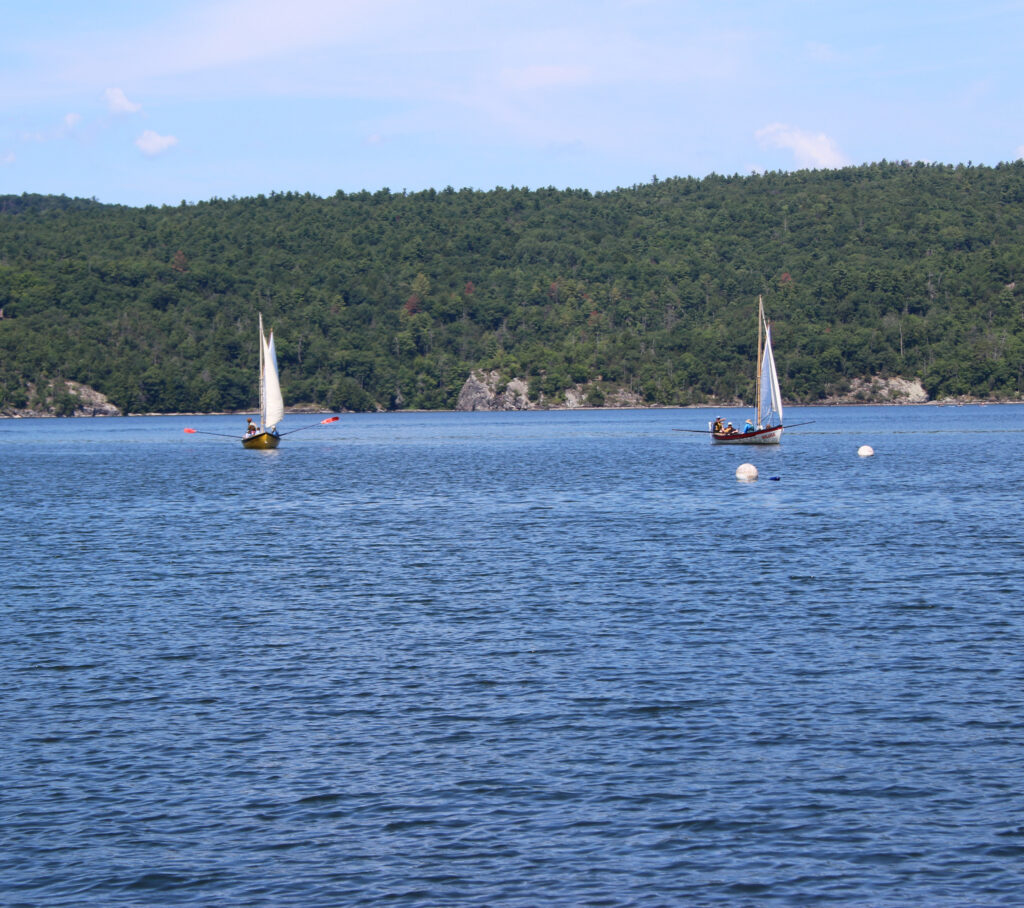
At the end of July, two of our Museum staff, Matt, our Sailing Programs Manager, and Indy, the Museum’s On-Water Educator, kicked off our annual Sail Champlain teen expedition with seven excited teens and the Museum’s fleet of sailing vessels including Split Rock Dinghies and whaleboats. This year’s expedition skill focus was on journeying, planning safe trips, and navigating; though sailing skills were still vital.
The first day began with a crash course on sailing, after which the campers prepared their first meal. Following lunch, the campers practiced their capsize recoveries and then took the Museum’s five Split Rock Dinghies out to practice their new skills. They were quick studies; despite being primarily first-time sailors, they fared extremely well and zipped over to the Palisades (on the New York side of the lake) and back. Some campers got their first taste of handling stressful on-water situations, as they capsized and had to be rescued, which they handled admirably. This left the group leaving later than desired from North Harbor for their evening campsite, Adirondack Cove. However, the crew were able to work together as a team to overcome the shortened timeframe and still had some excellent camper-made dinner at a reasonable hour.

The following day, the wind was extremely high from the south, at around 20 knots with gusts reaching even higher, and after discussion with the camper leaders of the day (the “Watch Officers”), they made the call to remain at their current campsite. In the morning, everyone hiked to Barn Rock and appreciated the view, where the campers discussed how it may have been used as a lookout in the early centuries of habitation on the lake. Everyone went down to the water to go swimming. The group then split up. Matt took some of the more hiking-oriented campers up to see the remains of the mining operations that were in the area, while Indy took the rest through the woods back to camp, practicing their orienteering skills along the way. The afternoon was spent learning about the whaleboats, practicing those skills with a variety of games, and then the campers had a block of unstructured time in which some of them learned to play a couple of card games.
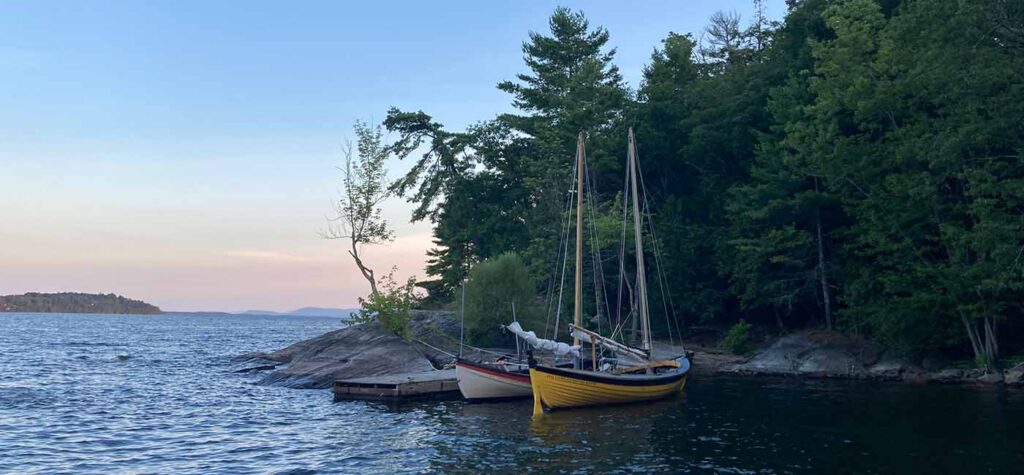
Wednesday was still pretty windy, at 10-15 knots from the south, but after reviewing the weather the night before and the morning of, the Watch Officers and the counselors decided to try for Kingsland Bay. The Watch Officers reviewed the charts and noticed that Fields Bay was only 3-6 feet deep and decided on a heading between Diamond Island and the green can marking the edge of the shallows. Sugar Moon set off first and managed to set both sails. However, the wind was stronger than predicted, reaching closer to 20 knots, and they quickly found themselves overpowered and having difficulty handling the boat. The crew was quick to drop the jib to reduce sail area, but the wind was still too strong. They had been washed straight up to the Vermont shore, so the crew was forced to attempt a jibe. Despite being a safety jibe, the boat still heeled quite a bit and took in some water, much to the campers’ chagrin. The crew of Beluga took note of Sugar Moon’s progress and set only their jib, tracking along the lake until both boats could take shelter in Snake Den Harbor to adjust sails. Sugar Moon dropped the mainsail and put up their smaller storm jib and sailed on that alone for their crossing. Despite being in a stressful situation, the campers kept their cool and were able to comfortably sail to Kingsland Bay. That evening, the campers cooked a delicious meal of mashed potatoes spam over the campfire that was a surprising hit, and then Matt organized a game of Sardines for the campers by popular demand.
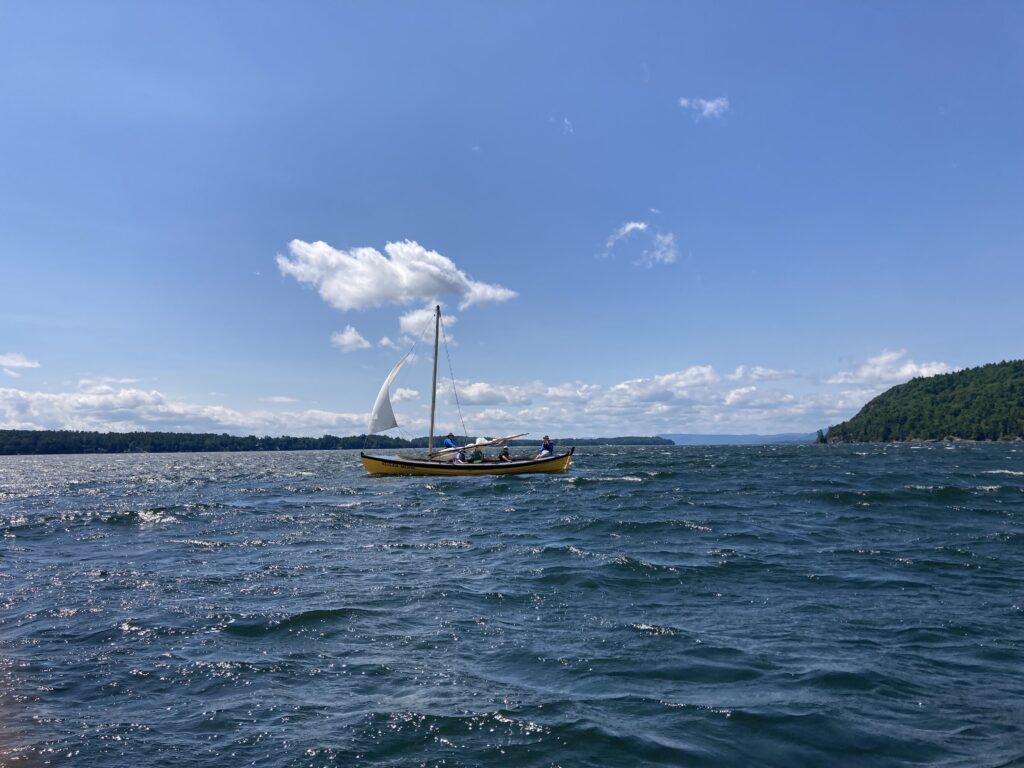
On Thursday morning, the Watch Officers reviewed the weather again, which called for a very low southern breeze. This would have made it difficult to make the 15 miles to D.A.R. State Park, the scheduled destination. More importantly, the wind the following day would be variable and light, which would have made it nearly impossible to return to the Museum under sail. After discussing other options with the Watch Officers, they made the call to return to Adirondack Cove for the final evening. They planned on returning the same way, passing between Diamond Island and the Fields green can. Initially the wind was extremely low and shaping up to be a very long day, but a sudden wind line approached, and the boats found themselves in high wind ‘white-cap’ conditions. The campers, experienced from the previous day’s weather, handled it without issue. However, Sugar Moon failed to find the green can until they were well inside Fields Bay, and Beluga struggled to tack out of the region, so they braved a crossing through the shallows. Luckily, they had no issues. In Fields Bay, the sailboats passed a fleet of small steamboats heading for the mouth of the Otter Creek, and some blew their horns in response to the camper’s waving, which delighted all members of the trip. They arrived safely for their last night of the expedition, and after making s’mores at the campfire, Indy organized a stargazing session with a surprise appearance of four shooting stars!
On the final morning the campers were able to sleep in a little, and then they began their trip across the lake back to the Maritime Museum. They played some of the games that they had all trip, such as Human or Waffle (trying to guess a concept by comparing two options) or the Isle of Bologna (a riddle where some things can go to the island and some can’t due to a mystery condition); and asked great questions about everything from electromagnetic waves to the origins of speech.
The campers had all taken a step outside their comfort zone and learned not only sailing and camping skills but also grew a lot as people. They were noticeably more confident, were more prepared to take initiative and complete tasks even in stressful situations, and worked as a team in a way that was night and day from when they arrived.