
By Collections Staff
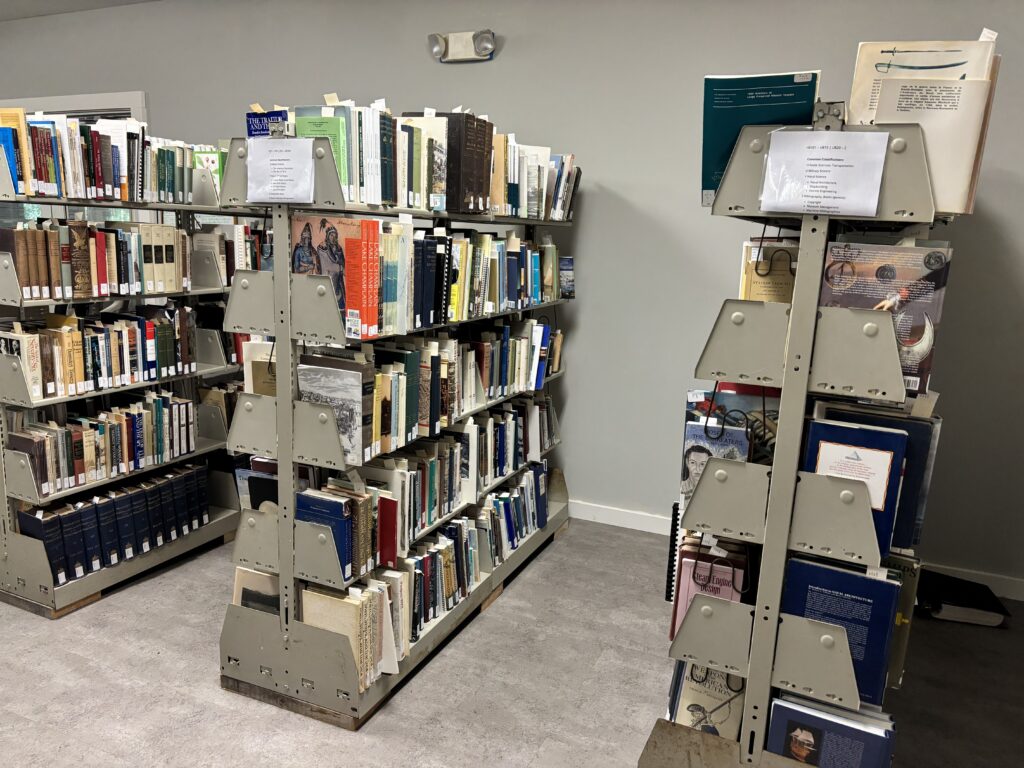
For years, Lake Champlain Maritime Museum’s Research Library has been a resource tucked away behind the scenes. It’s helped staff, researchers, and volunteers uncover the stories behind the artifacts, vessels, archaeological sites, and people that make up the history of Lake Champlain. We’re excited to announce that our library’s catalog is now available online so that you can explore the titles in the collection from wherever you are.
With approximately 2,300 volumes, the library brings together books and publications collected by the Museum through both purchase, self-publication, and donation (and if you’re interested in donating, stay tuned! More information on that below). The collection continues to grow, but its purpose has remained consistent: to support research, interpretation, preservation, and a fuller understanding of the maritime history and archaeology of the Lake Champlain region.
So, what might you find there?
Quite a lot.
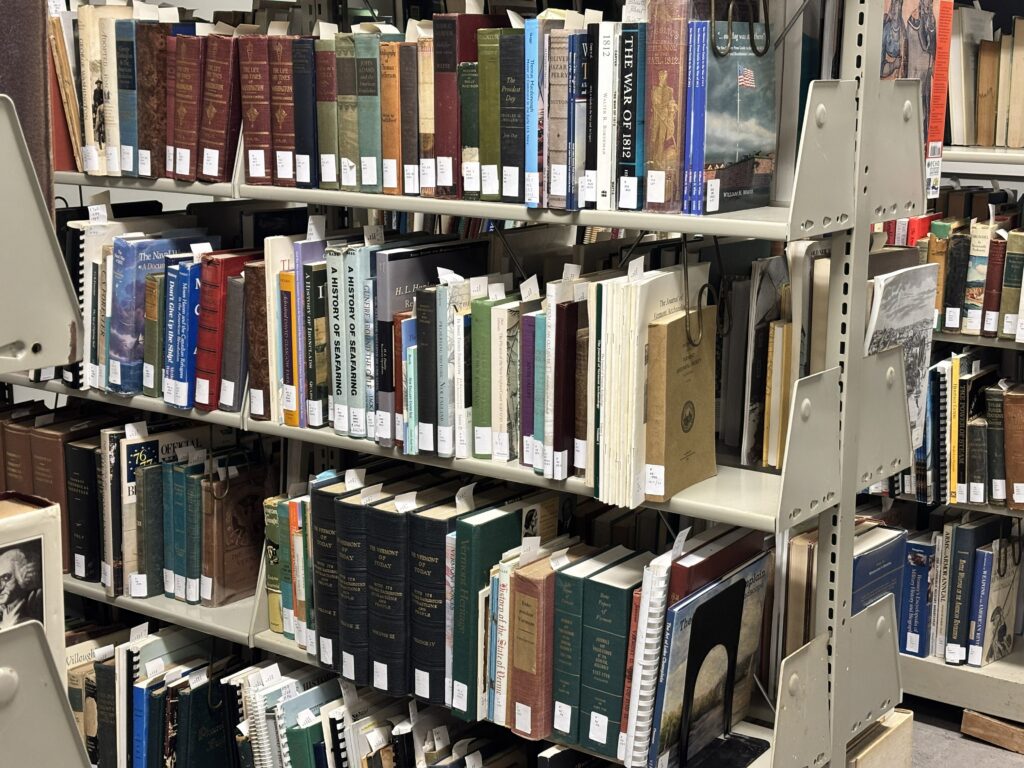
The library’s holdings stretch from centuries ago to the present day, with a particular focus on the history of Lake Champlain, upstate New York, and Vermont. There are books on archaeology and Indigenous history, including a significant emphasis on Abenaki history; publications about the American Revolution and the War of 1812; and works exploring the commercial eras of steamboats and canal boats up through the modern recreational era including boatbuilding traditions, notable figures, and historical methods.
The collection also reaches beyond the lake itself to cover subjects from transportation and communications to military and naval history, shipbuilding, marine engineering, and museum management. There are works discussing archaeological case studies from around the world, and books that detail the typology of commonly found artifacts like ceramics, glass, and firearms.
For those interested in the Museum’s own archaeological work, those publications are also available to you. We’ve cataloged dozens of our in-house publications that include reports on underwater cultural resources from cultural heritage sites on Lake Champlain and wider New York, including the Hudson River Valley, Onondaga, and Seneca Lake. They’ve been written by the people who have made this Museum successful over the years, from the early days as the Champlain Maritime Society to more recent fieldwork of the various shipwrecks on the lake bottom.
Like all our Collections, this library is more than a collection of books about boats, or even a collection of books about Lake Champlain. It is one of the ways the Museum preserves the context needed to understand the stories we tell.
Let’s say we want to tell an interesting story about a historic shipyard, which is now an archaeological site we’re excavating. Where do we start? A book about shipbuilding might help us understand how a vessel was constructed, but it can also help us think about why a boatbuilder made certain choices. Pair that with a history of the Champlain Valley, and we can begin to understand what natural resources were available, what the local economy looked like, and what might have influenced the people working in that shipyard. A work on Abenaki history might prompt us to ask different questions altogether, including how Indigenous perspectives—too often left out of historical narratives—might show up, or fail to show up, in the archaeological record.
This is where a research library becomes especially valuable. One book rarely tells the whole story. Instead, it’s the connections between sources that help us build a richer understanding of the past. Making the catalog searchable online allows more people to find those sources, make those connections, and do this kind of exhilarating research themselves.
There is something exciting about making a library searchable. A catalog can turn a shelf full of books into a map of questions: What happened here? Who was here? How did people build, travel, work, and live on and around Lake Champlain? What sources can help us understand a story from another perspective?
We hope the online catalog makes it easier for more people to start asking those questions.
More information about the nuts and bolts of this research library and how to access the catalog is available in this Finding Aid we developed for the collection. If you want to jump straight to browsing, you can do so on our online hub here.
Please note that you can consult the books in our collection by advance appointment. As part of our permanent collection, the library does not circulate. If you find something in the online catalog that you would like to explore, we invite you to make an appointment. Email info@lcmm.org to arrange a visit and review publications from the Research Library Collection.
PS If you are interested in donating books to our Research Library, we’d love to hear from you! Acquisitions to the library collection follow the Collecting Scope of our Collections Management Policy (meaning we’re prioritizing collecting books we don’t already have which illuminate the stories of the Champlain Valley). Please reach out to info@lcmm.org so we can start the conversation about your donation!