
By Conor S. Brandt, Content Coordinator
As our team takes time this week to gather with family, friends, or loved ones for Thanksgiving, we’re bringing you a timely Lost & Found blog post featuring some of the artifacts in our collections that would fit perfectly* on the dinner table! From plates and cups to salt shakers and knives, we’ve got everything you need for an unforgettable holiday meal. Join us as we set our table using only objects from our collections!
This blog is a part of our continuing Lost & Found series where we highlight our favorite objects in our collections that might not always make it to the exhibit floor. In the previous installments of this series we’ve discussed the objects we’ve recovered from Valcour Bay, what we’ve recovered from Arnold’s Bay, and some of the Munitions and Gear we’ve collected that would’ve been used during the Revolutionary War.
*hypothetically, of course! Our historic collections stay in storage and on exhibit and are never used for daily life. That’s what our education collections and 3D prints of historic objects are for!
Setting the table
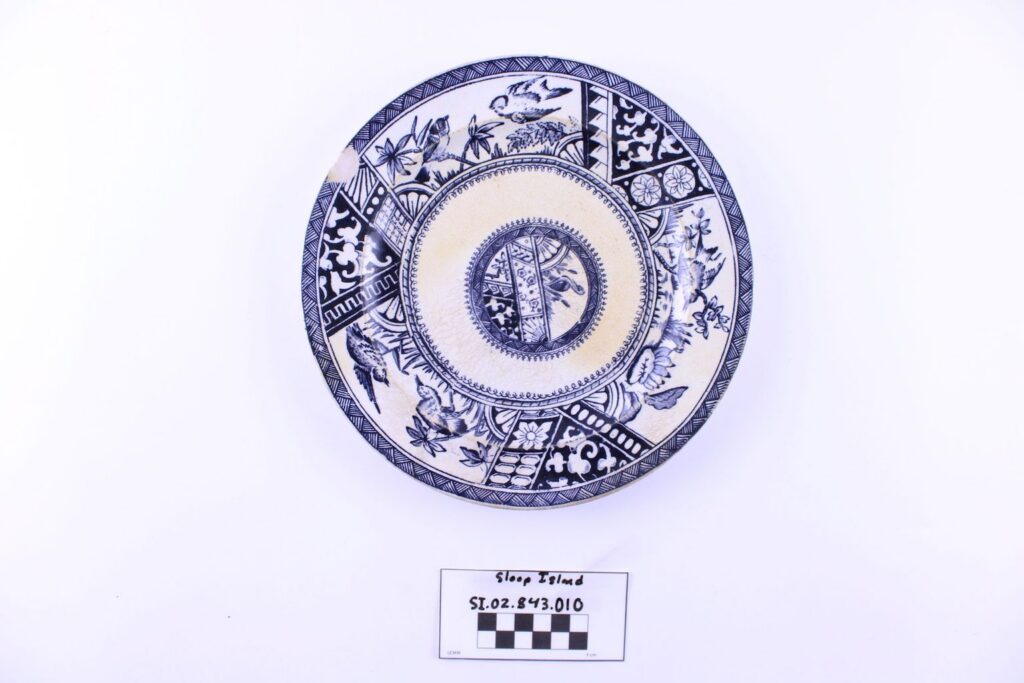
The first thing laid down on any dinner table is, of course, a plate to place our food on. We’ve recovered dozens of different plates from shipwrecks across the lake, but one of our favorite pieces is this blue transferware plate. Recovered from an as-yet-unidentified shipwreck sunk around 1915 that we call the Sloop Island Canal Boat, the details on this plate can still be seen in exquisite detail, and would be sure to delight any dinner guest!
Take a look at the beautiful details on the plate. Transferware plates like this one were made by printing a design onto a copper plate, transferring that design to a specially sized piece of paper, applying that paper to the plate, then glazing and firing it. The transferware industry peaked in popularity in the nineteenth century, and declined after that. The fact that this plate is in such good condition, so long after it sank beneath the lake, is sure to be talked about by the whole table.
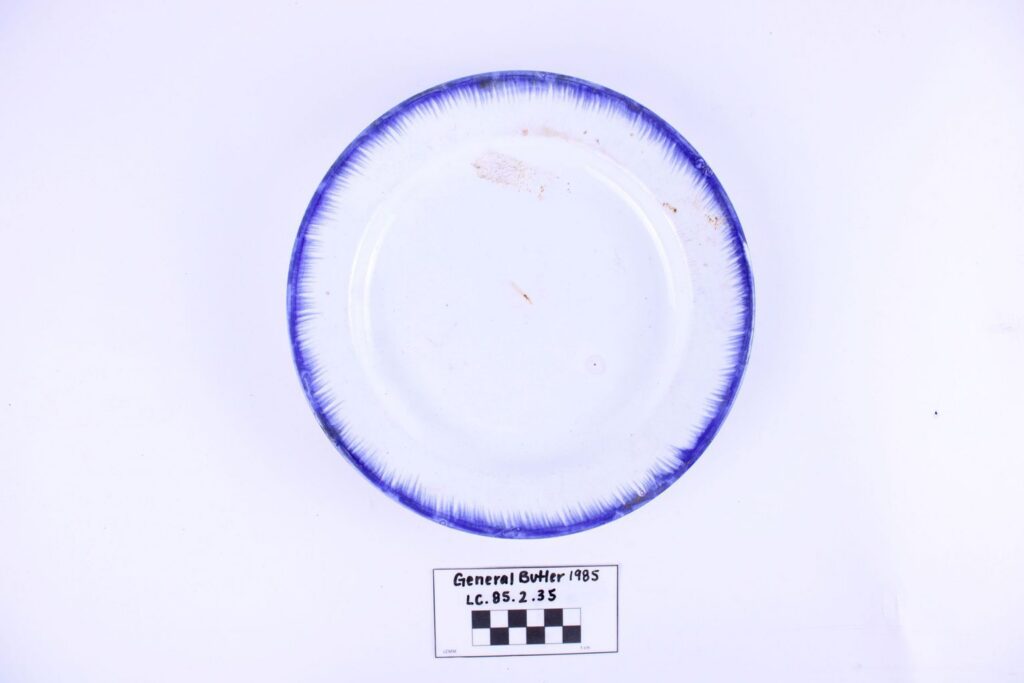
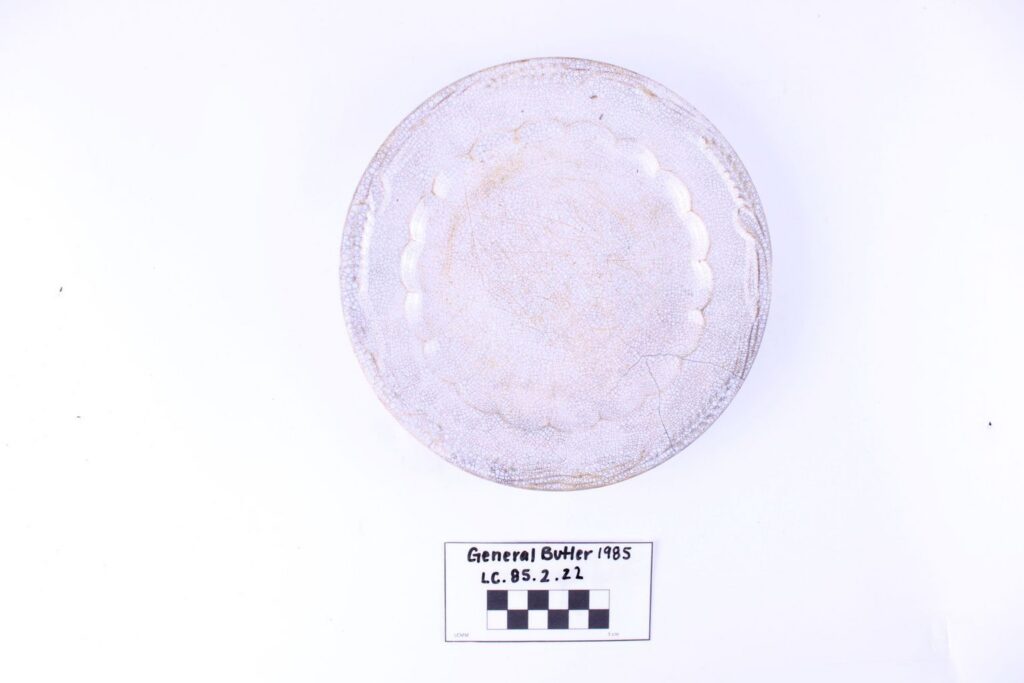
Of course, you can’t set a table with only one plate, so we need to go searching through our collections for a few more. Lucky for us, the museum has recovered a variety of different plates over the years. Here are two more plates we could use to set our table. One is a Blue Feather edged-plate (top right), the second is a ceramic plate with detailing along the rim (bottom right). Both of these plates were recovered from the shipwreck of the sailing canal boat General Butler that sank in Burlington Bay in 1876, and are in amazing condition considering they are well over a century old, and survived a shipwreck!
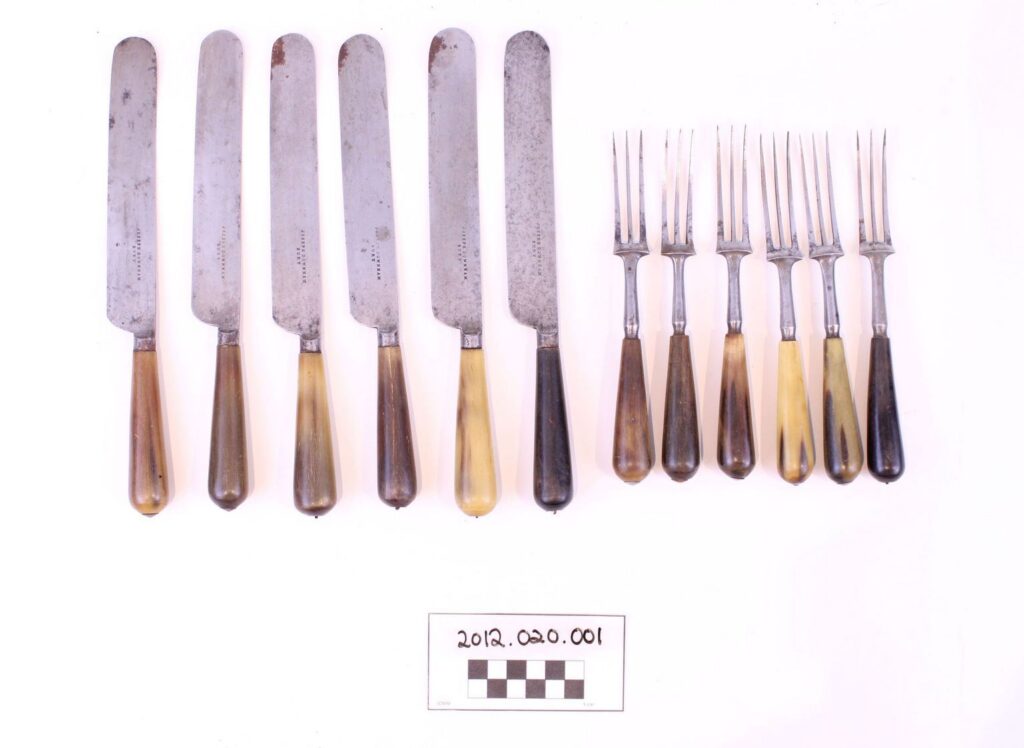
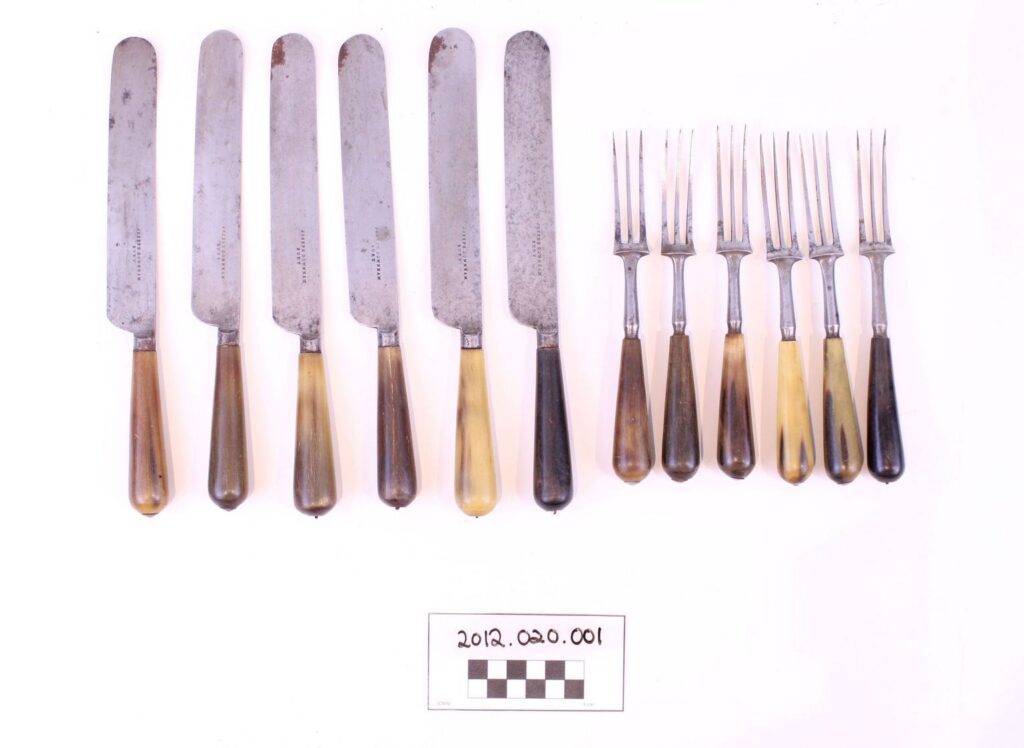
If we are going to set our table for dinner, we’ll need more than a collection of plates — we need to start looking for utensils. Delightfully, our collections also include a set of mid-nineteenth century knives and forks that will be perfect for our purposes. One detail that is especially interesting is that the knives have the name Joseph Downham Bury stamped on it.
So we’ve got plates and the set of utensils covered. What about the dinner service?
Serving the Food
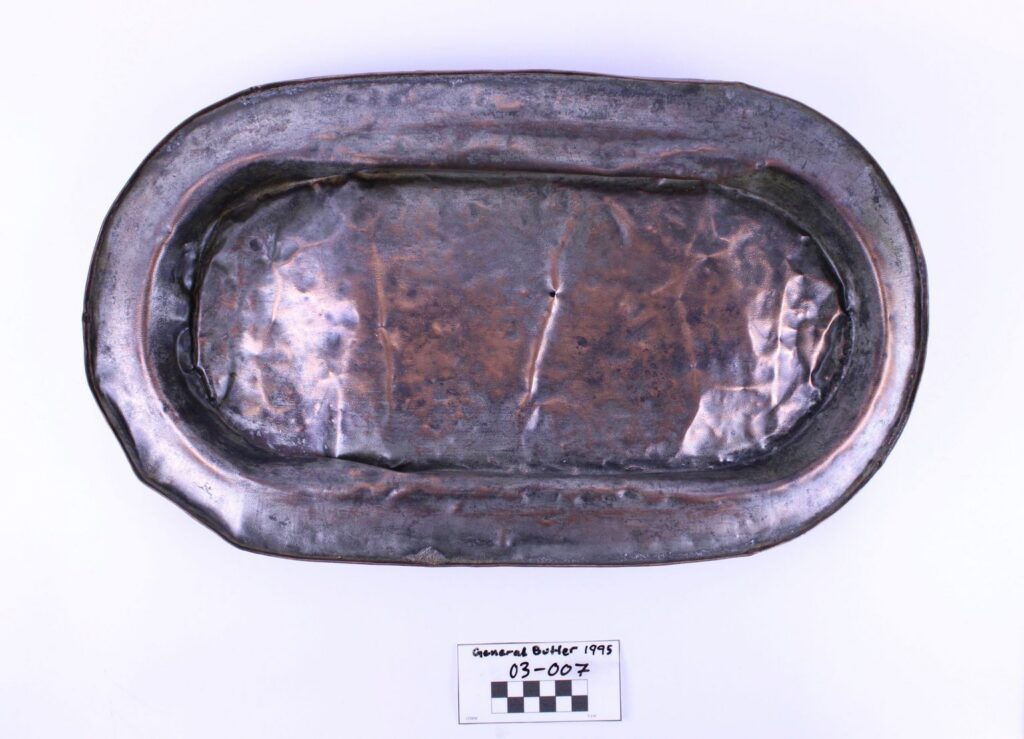
With our table set, we need to search through the artifacts stored in the museum’s collections that we can serve the meals on! Fortunately for us, there is a wealth of objects for us to choose from. This copper platter (left) would be a great option. It was also recovered from the wreck of General Butler, the same wreck that the two earlier plates came from. While it isn’t in the best condition, with obvious dents on the surface and uneven oxidization around the edges, the fact that it survived a shipwreck at all would surely provoke conversation around the dinner table.
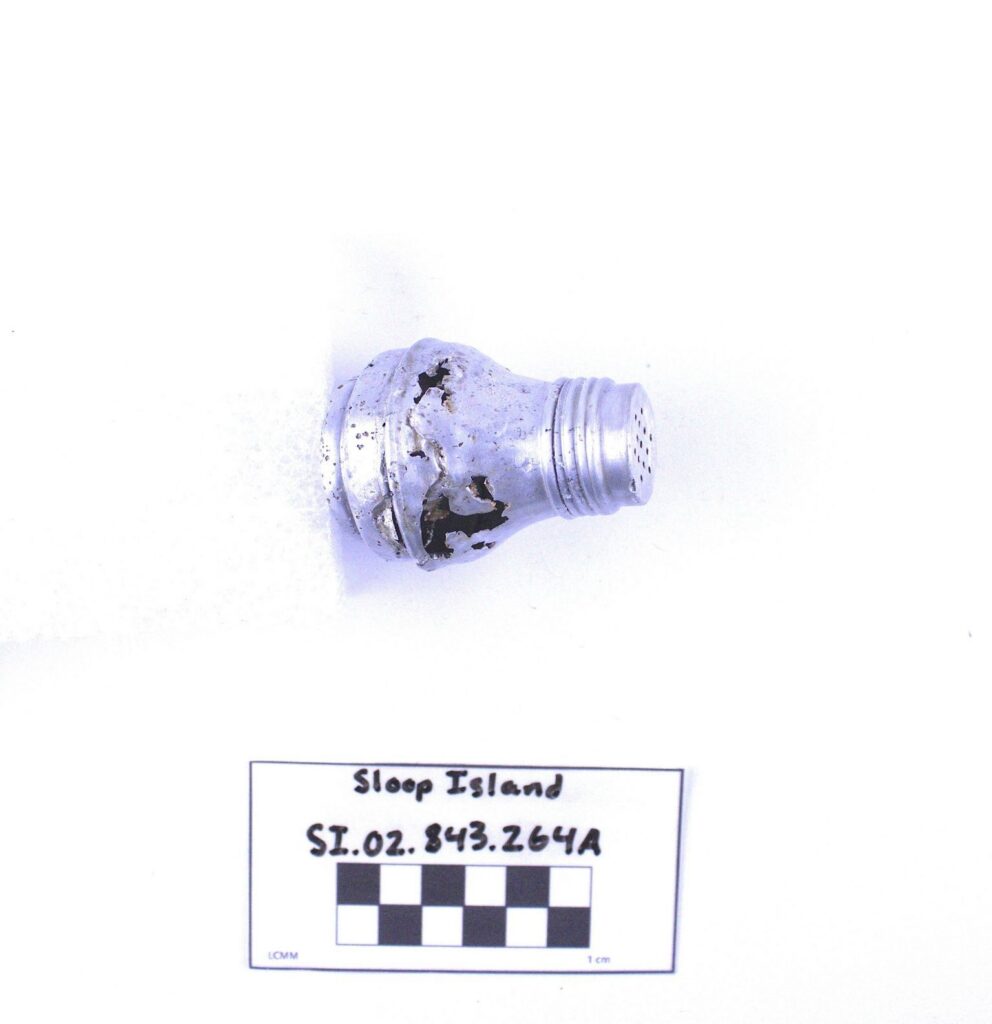
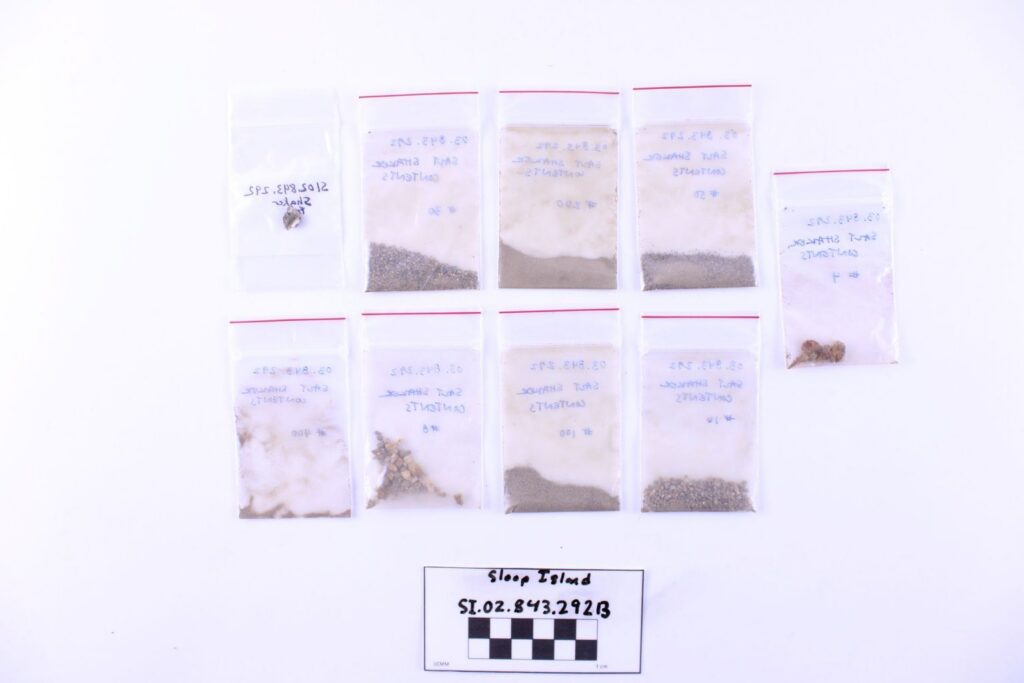
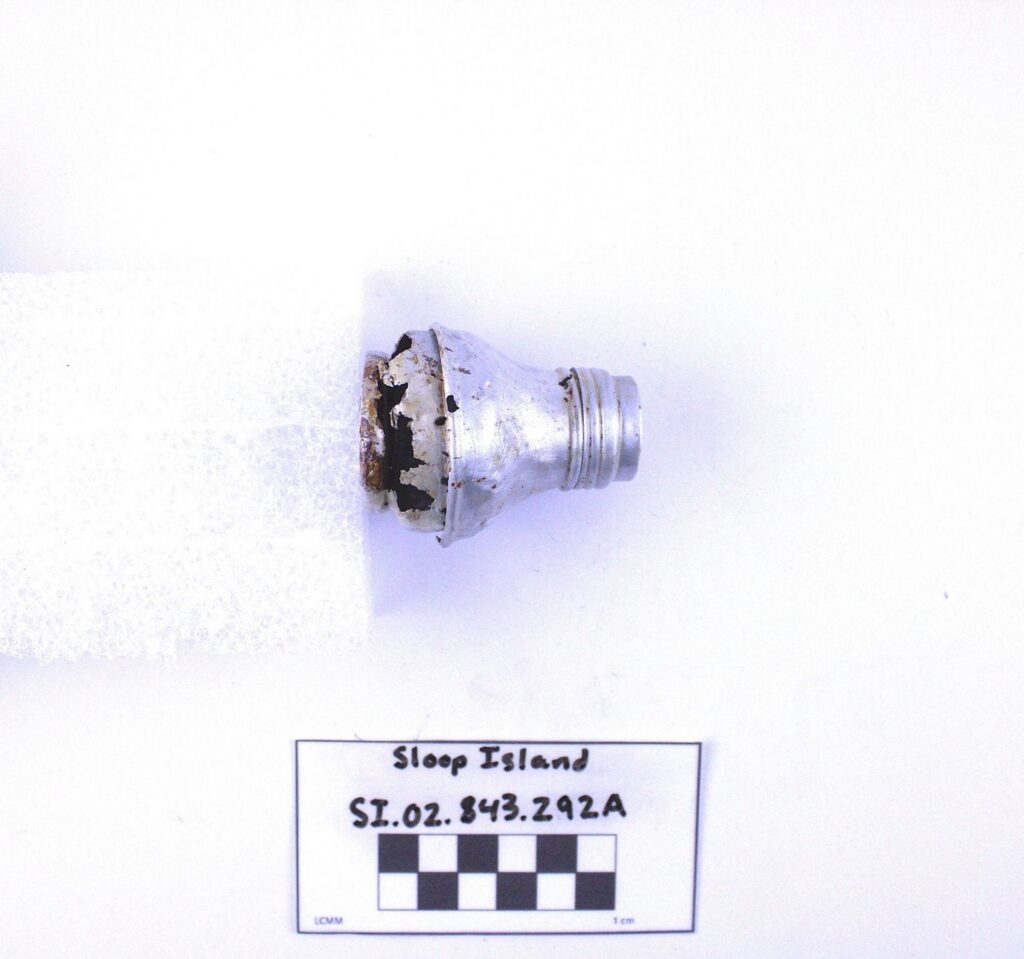
Having now chosen a platter to serve on our food, there is only one thing left to put on the table: something to spice up the food of course! We’d suggest the salt and pepper shakers recovered from the wreck of the Sloop Island Canal Boat (the same wreck where we found the transferware plate).We even have particles of salt and pepper from these shakers in our collections as well.
This hypothetical exercise is an important reminder that even a century ago, sailors and families aboard canal boats used many of the same things we do nowadays. These are common items and yet important reminders of previous generations of families in the Champlain Valley and the lives they lived.
With dinner now served on the platter, salt and pepper shakers at hand to properly spice our food, and plates and forks set out, we can now enjoy our holiday feast. We hope you have a wonderful holiday meal – perhaps with a new appreciation for the objects on your table as well!
Thanks for joining us as we set out cutlery and plates from the museum’s collections!
If you would like to take a closer look at these objects, or any other objects in our collections, follow the links below to explore our digitized collections where we have archived many more stories!
- Link to Blue Transferware Plate
- Link to Blue Feather edged-plate
- Link to White Ceramic Plate
- Link to the Set of Knives and Forks
- Link to Copper Platter
- Link to the Salt and Pepper Shakers, as well as the Pepper and Salt Particles
- https://catalogit.app/collections/8849e180-ca49-11ed-97fc-a5b23cb3437d/entries/c0d0a9b0-af45-11f0-a066-3bf2bb33d053
- https://catalogit.app/collections/8849e180-ca49-11ed-97fc-a5b23cb3437d/entries/77a83810-af46-11f0-a066-3bf2bb33d053
- https://catalogit.app/collections/8849e180-ca49-11ed-97fc-a5b23cb3437d/entries/c5f95a30-af46-11f0-a066-3bf2bb33d053
- https://catalogit.app/collections/8849e180-ca49-11ed-97fc-a5b23cb3437d/entries/429a37e0-af46-11f0-a066-3bf2bb33d053
PS We’re always looking for more information! If you have more context to share about any of these items, please don’t hesitate to reach out to us at info@lcmm.org.