By Collections Staff
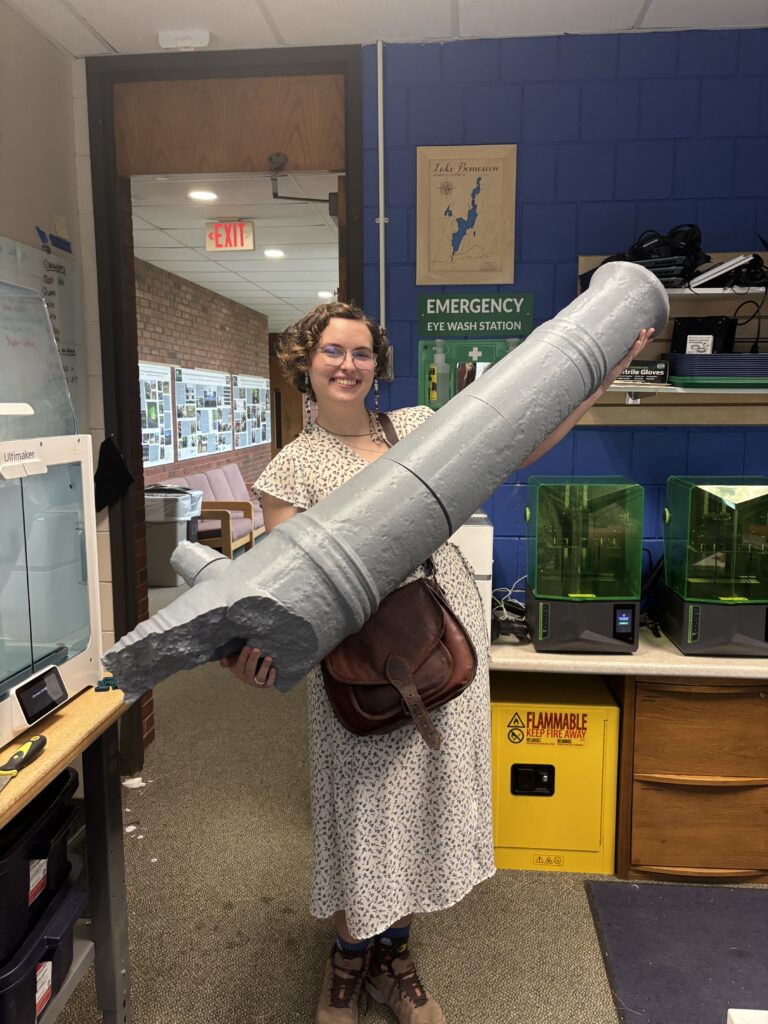
As we close for the season after a successful year commemorating the 250th anniversary of the American Revolution, we’d love to highlight one of the partnerships that made it all possible: our collaboration with Vermont State University Castleton and the Clinton County Historical Association! Thanks to a grant from the Champlain Valley National Heritage Partnership, the Museum team worked together with these two fine institutions to scan, print, and display 3D printed versions of a cannon which exploded aboard the Patriot gunboat New York on October 11, 1776.
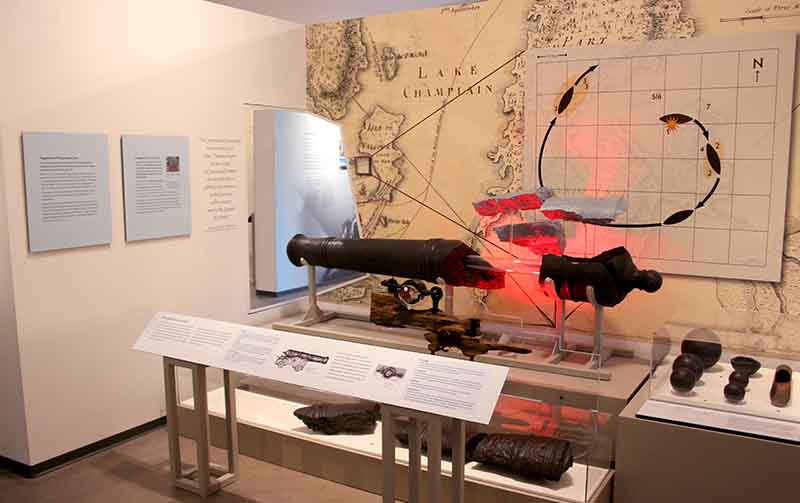
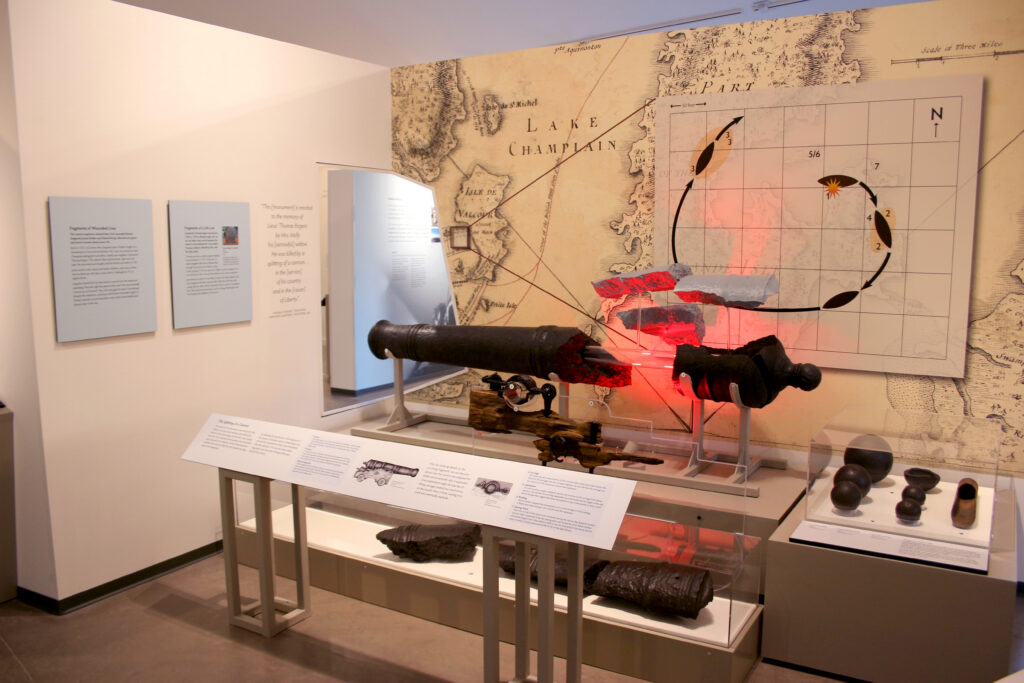
This cannon carries incredible stories from both the past and the present. The accident itself affected families and communities around New England. Archival research conducted at the Museum and by community researchers, especially George Quintal, identified three individuals directly affected by the blast – Thomas Rogers, who died in the explosion, and Jonas Holden and Daniel McCay, who were injured. Our new exhibit, appropriately titled Fragments: Voices of the American Revolution on Lake Champlain, centers their stories alongside the cannon.
The cannon fragments themselves (including the final piece which was recovered this July!) were the foundation for archaeological research at the Museum. New York State Police Diver Ed Scollon found the muzzle while diving in Valcour Bay in 1999, and together with the Museum, launched the Valcour Bay Research Project, documenting and conserving hundreds of artifacts from the lake bottom. Many artifacts from this excavation are included in the Fragments exhibit.
While the cannon is an incredible artifact, it’s not a particularly accessible object for visitors to interact with. The fragments are hundreds of pounds of solid iron each: not easy for folks to manipulate or to transport to other institutions on loan. That’s where 3D scanning technology comes in! This incredible tech is a great way to make the object (and the stories it tells!) more accessible to our visitors.
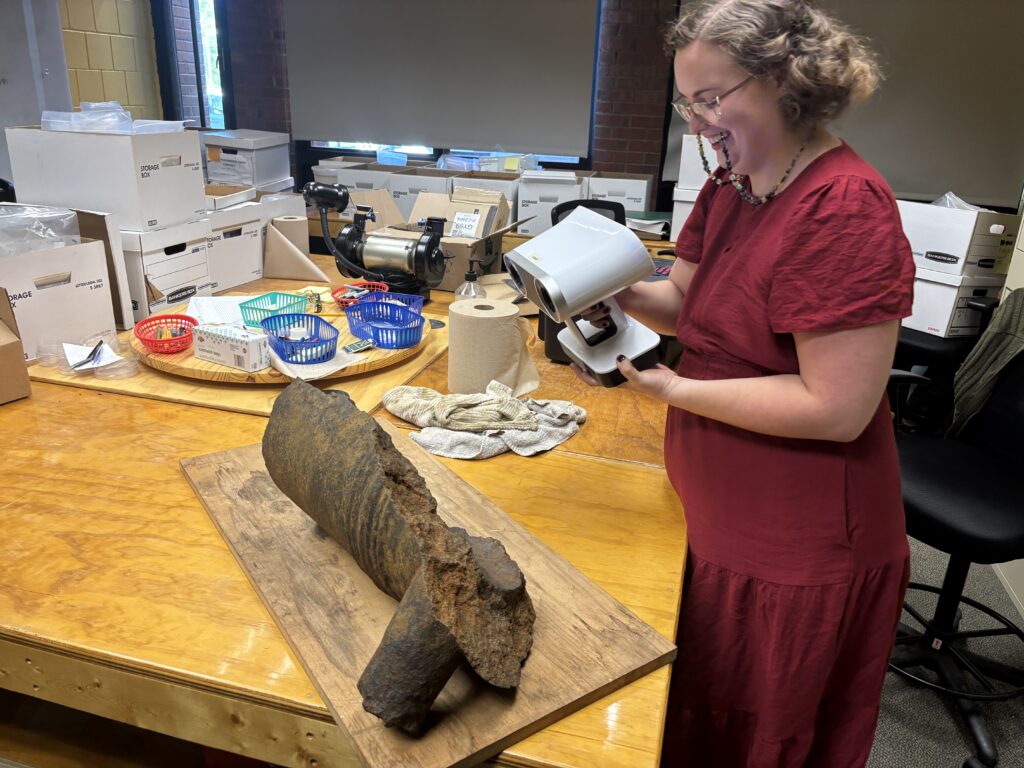
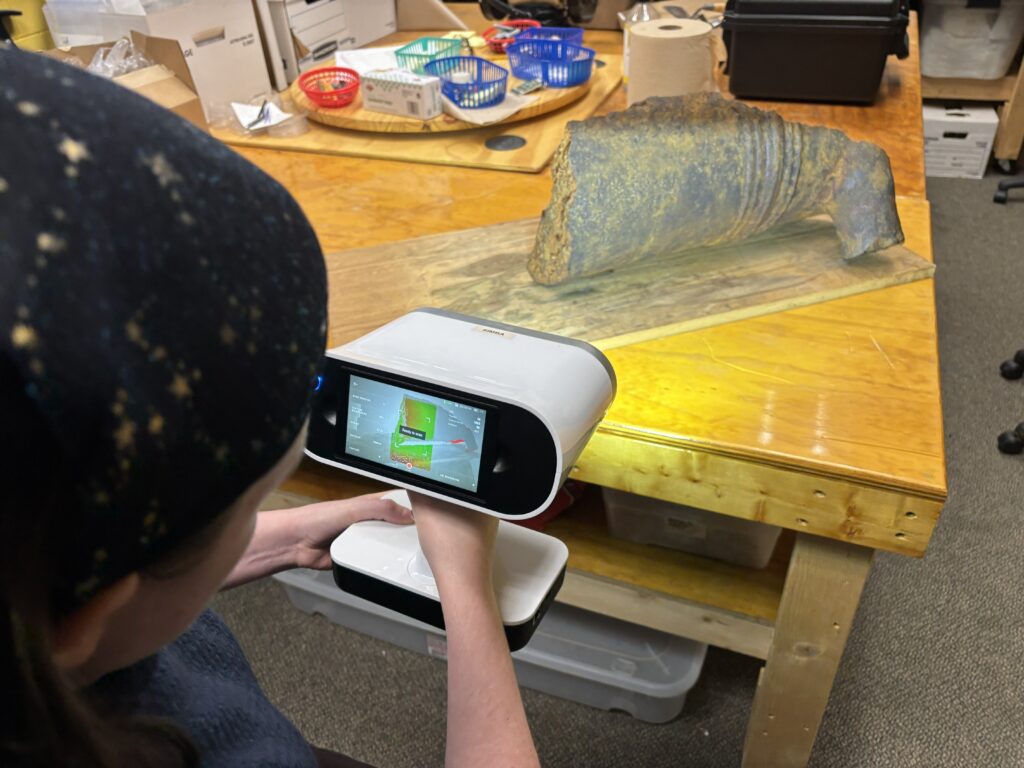
Dr. Matt Moriarty and Owen Edgcomb from Vermont State University’s Castleton Innovation Lab led the effort to transform each fragment into a 3D model using a structured light 3D scanner. These scanners work by flashing a pattern of light onto the object repeatedly and measuring the distortions in the pattern, creating a 3D model with mere millimeters of difference between the model and the real artifact.
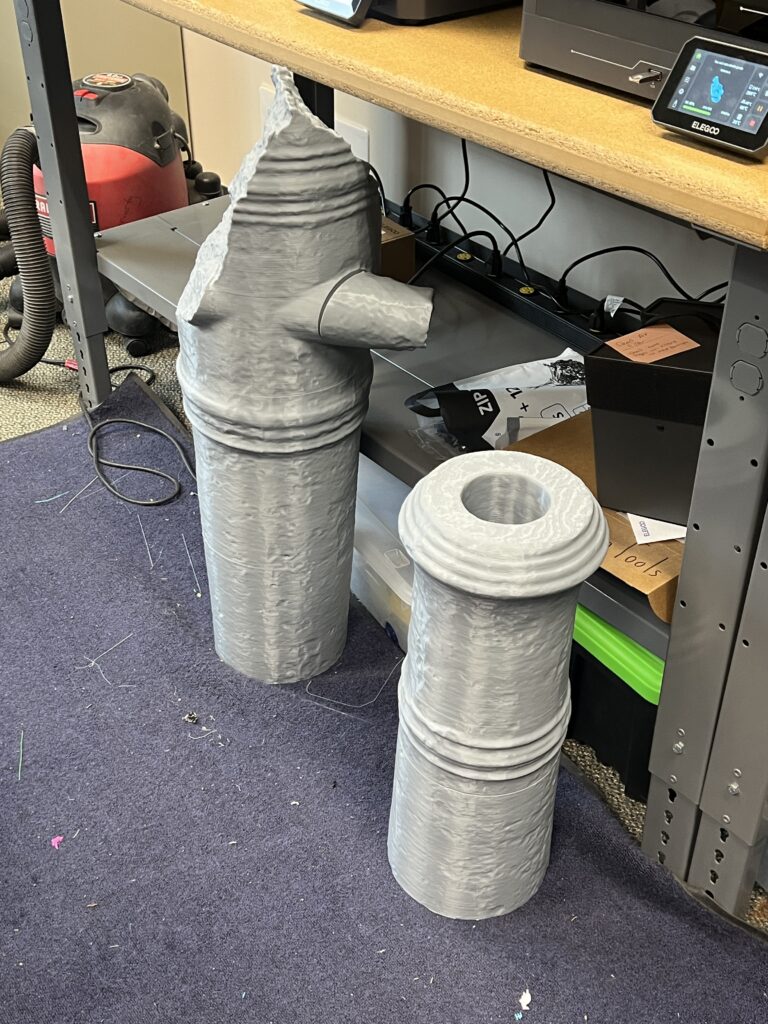
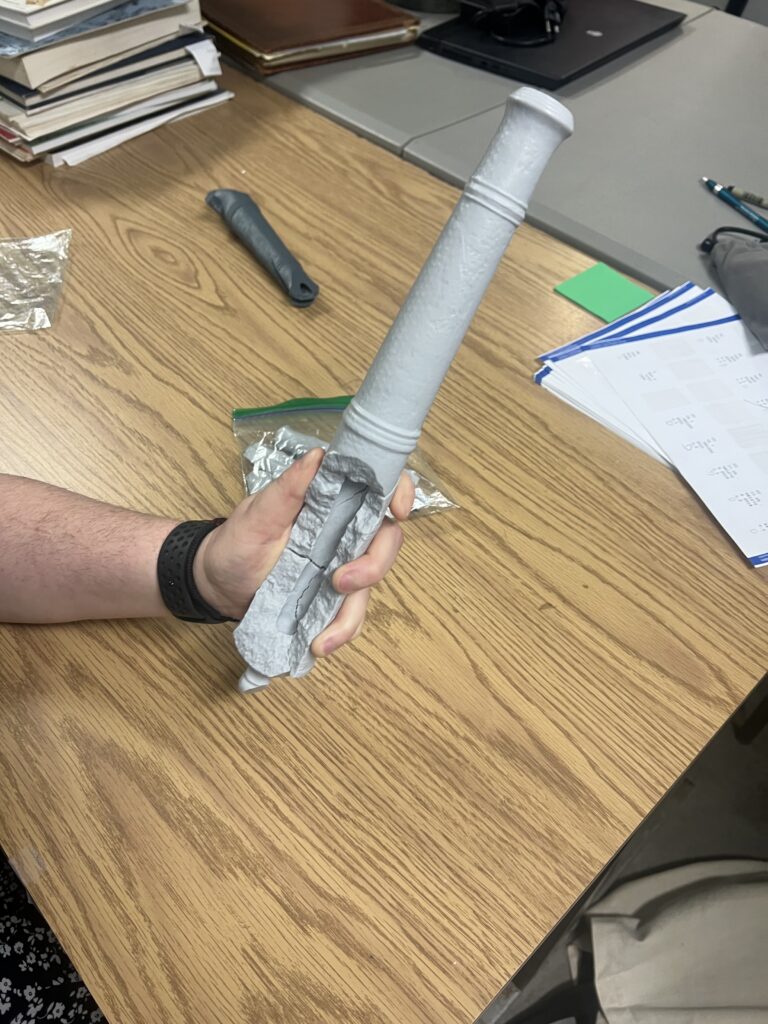
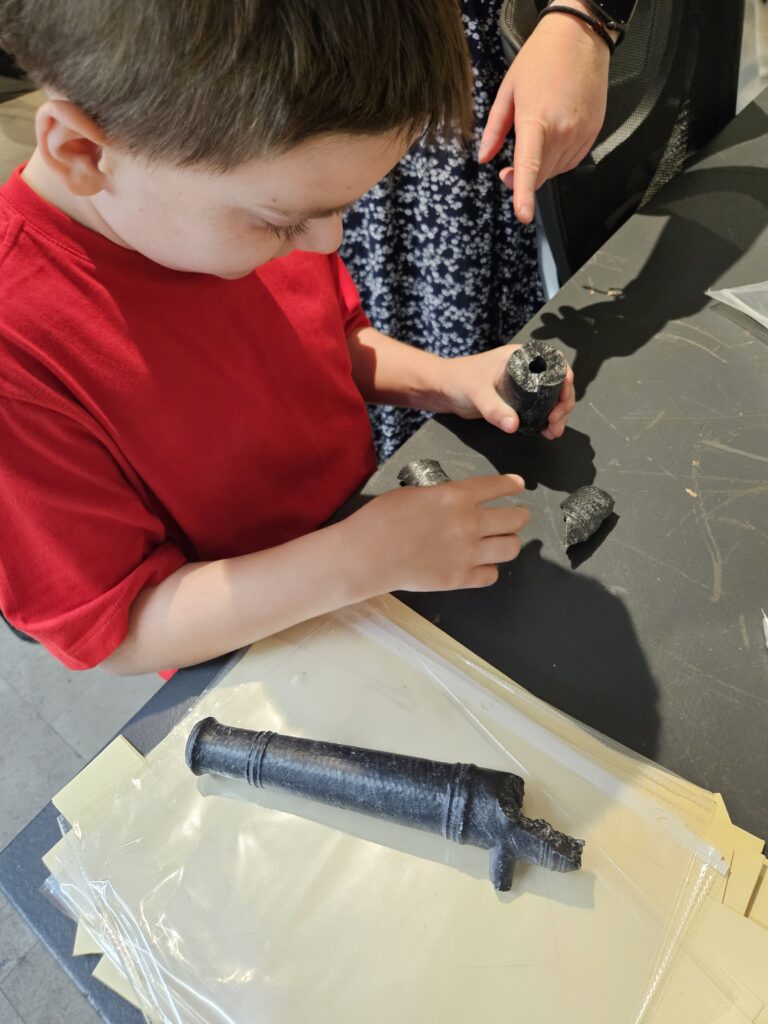
At Vermont State University-Castleton’s 3D printing lab, Owen and Dr. Moriarty then printed replicas of the exploded cannon on multiple scales. Smaller versions at 10% and 15% scale make it easy for people to see how the fragments fit together. 100% scale models made for an especially impactful way to display the cannon all together. At the Museum, 100% models are supported by Plexiglas rods so that the fragments look like they are exploding. And at Clinton County Historical Association in Plattsburgh, NY, a much lighter version of the thousand-pound cannon is now on display in their exhibit about the American Revolution in the Champlain Valley!




We were delighted to share the stories of the American Revolution, the discoveries of the Valcour Bay Research Project, and the technical skills of Vermont State University’s 3D department with visitors at both Clinton County Historical Association and Lake Champlain Maritime Museum this season. Thanks to our whole community for being a part of it!
Big thanks to Dr. Matt Moriarty and Owen Edgcomb of Vermont State University-Castleton, Geri Favreau, Helen Nerska, and the team at Clinton County Historical Association, and our funder, Champlain Valley National Heritage Partnership.