
By Meghan Hill Bartholomew, Educational Programs Manager
Every year, Lake Champlain Maritime Museum reaches thousands of students via outreach programing and field trips to our campus. These programs educate kids throughout the Lake Champlain Watershed about the natural and cultural resources of the region with the goal of inspiring a lifetime of stewardship.
This year, a grant from the Lake Champlain Basin Program helped us work toward this goal. This funding made all of our Lake Ecology field trips free to schools and included funds for Museum staff to support teachers in implementing environmental action projects, student-led projects that help resolve an environmental issue, with their students. These projects put stewardship directly into the hands of students. Participating in environmental action projects empowers students to become leaders within their communities and shows them that they can play an important role in protecting Lake Champlain.
Project Highlights
With the support of the Lake Champlain Basin Program, we collaborated with students at Stafford Middle School, Peru Middle and High School, Middlebury Union High School, Lake Champlain Waldorf School, and Barstow Memorial School on a wide variety of projects. Each of these projects began with students learning about threats to the Lake Champlain Watershed and culminated in actions to help improve the health of our lake.
Stafford Middle School in Plattsburgh, NY invited Lake Champlain Maritime Museum staff to run programs during their Salmon Release Day. Over the course of the day, Museum staff worked with 106 seventh graders to complete an environmental action project at their school. Students learned about the importance of preventing litter from entering waterways, then took part in a cleanup. In just a few hours, they removed several bags of garbage from the area around their school. Afterwards, they created a collaborative art piece featuring animals made out of some of the plastic waste they picked up. This was hung up at their school to educate other students about the impact of plastic pollution on the environment.
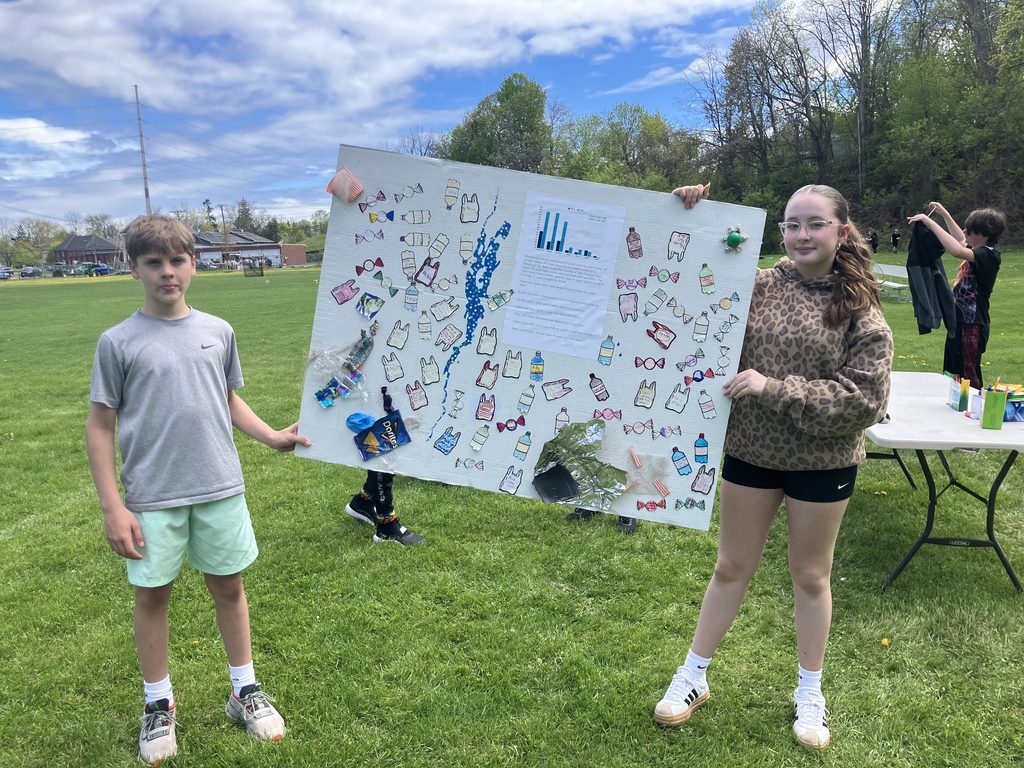
At Peru Central School District, students in the Students Against a Vanishing Environment (SAVE) club organized an Earth Fest and invited Lake Champlain Maritime Museum to participate. Over the course of the event, hundreds of students in grades 6-12 engaged in activities to learn about threats to our region’s natural resources. Museum staff educated students about the dangers of microplastics and their negative impact on Lake Champlain’s aquatic food chains and human health. Each student wrote a way that they can reduce microplastics in our waterways on a paper shape, which they added to a mosaic in the silhouette of Lake Champlain to display at their school.
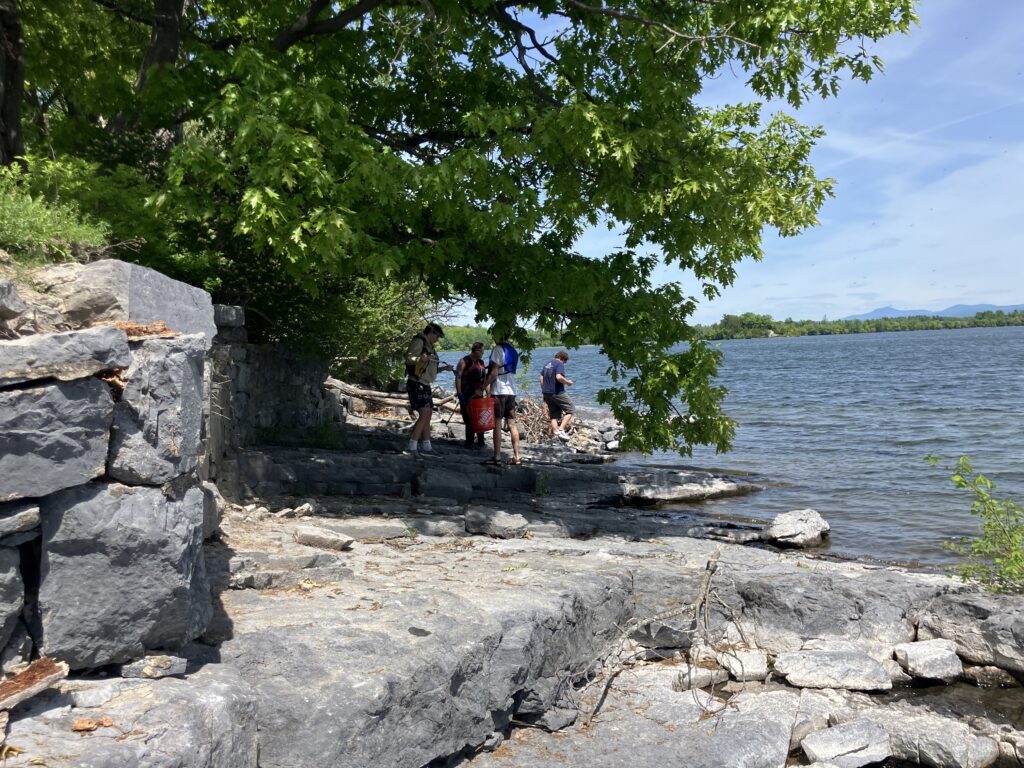
Students from Middlebury Union High School who participate in our Champlain Longboats program also engaged in environmental action projects. Museum staff brought them to Button Island, part of Button Bay State Park, to do a waterfront cleanup. They removed trash that had washed onshore from other parts of Lake Champlain and brought it back to the Museum to dispose of it properly. During the excursion, students observed fossils and learned more about the geological history of Lake Champlain.
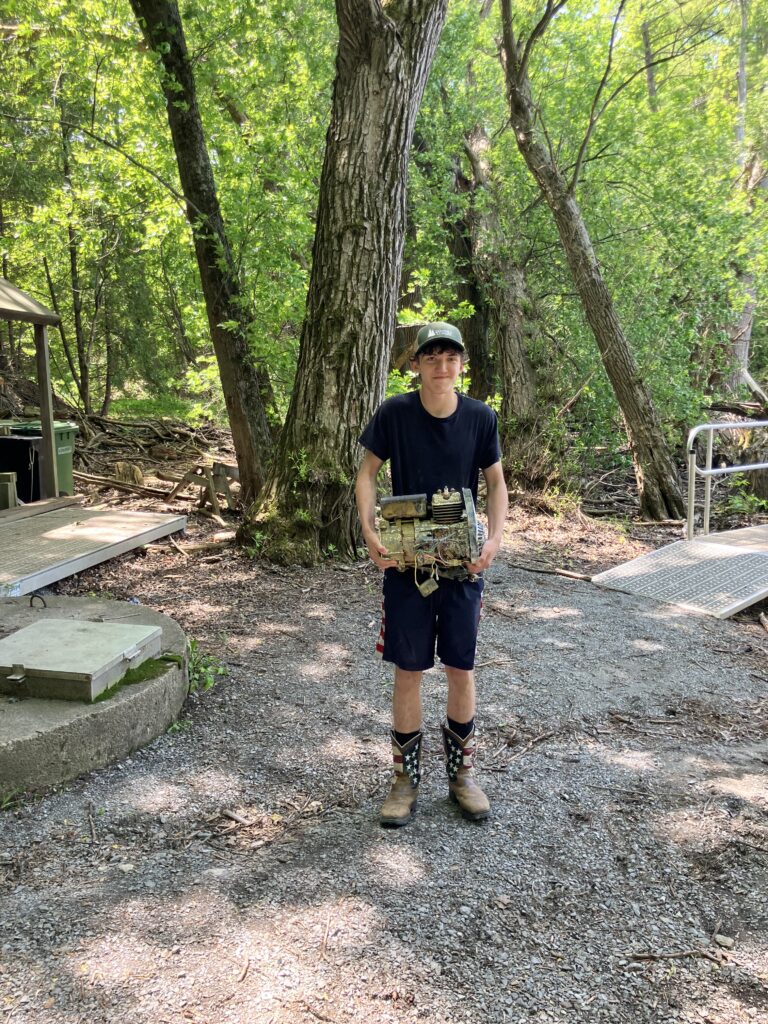
Seventh graders from Lake Champlain Waldorf school also participated in an environmental action project at the Museum. Over the course of a day, they learned about invasive species and their spread throughout the basin. They practiced the principles of Clean, Drain, Dry and learned how to prevent the spread of aquatic invasive species. They then spent the afternoon identifying and removing invasive species such as zebra mussels, Eurasian watermilfoil, and curly pondweed in North Harbor.
At Barstow Memorial School in Chittenden, VT, students spent a day learning about their school’s potential impact on the river that runs through the forest beyond their parking lot. They explored the river and caught benthic macroinvertebrates. After identifying the species they found, they discovered several were intolerant to pollution and therefore determined that the river is healthy. On their return to the school, students picked up any litter they found along the water and behind their school’s parking lot, thereby contributing to the continued health of this river.

Environmental action projects take teaching about stewardship of our natural resources a step further by putting students into the role of change makers. Numerous studies, such as this 2023 study by the American Psychological Association, have shown the prevalence of climate anxiety among children and teens and the impact that it has on their mental health. A 2021 survey of 10,000 in 10 countries found that 84% of respondents are moderately to extremely worried about climate change and the health of the planet. This fear for the Earth’s future is often accompanied by feelings of powerlessness, as children and teens often have little control over implementing environmental protection within their own homes. Environmental action projects allow educators to not only teach about issues, but give students an outlet to be a part of the solution rather than only hearing about the problems.
Thanks to the funding of Lake Champlain Basin Program, the Maritime Museum was able to provide 15 schools with Lake Ecology field trips and engage with 221 students from 5 schools to give them direct experience in the Lake Champlain Watershed making visible, positive change for the future of the lake.