
By Conor S. Brandt, Content Coordinator
In this blog series we show off some of the unique artifacts that have been recovered and collected from shipwrecks and other sites over the years. There is only so much room in our museum, and our collections are overflowing with objects that have interesting stories for us to tell!
In our last Lost and Found blog (click here to read it if you missed it!) we highlighted three objects we recovered from Valcour Bay and talked about what they may tell us about their former owners.
This week we want to show you the artifacts we recovered from Arnold’s Bay (known at the time as Ferris Bay, named for the family who lived there). This is the site where Benedict Arnold, and many of the Patriot sailors who escaped their defeat at Valcour Bay, ran their ships aground and set them ablaze to deny their capture by the British. These artifacts can teach us about more than the battle, though–it can teach us about the lives of the people who used them.
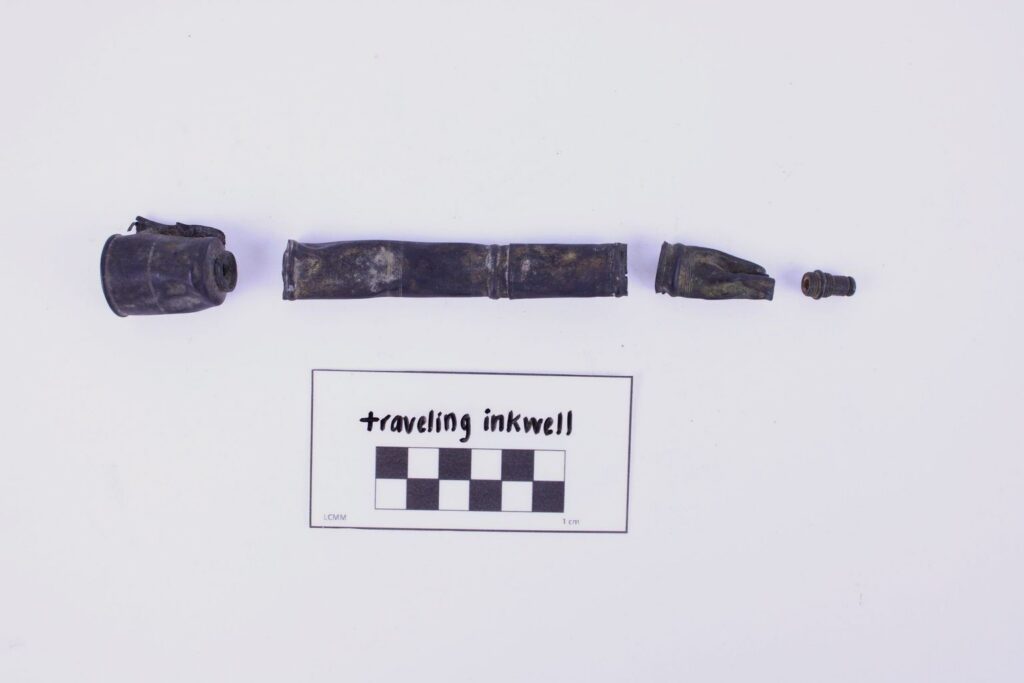
Inkwell and Pen


Look closely at the inkwell and pen and compare the photo to the illustration of what it may have looked like when it was whole. It’s in four pieces, and unfortunately rather damaged, but that damage can tell us something about its story. The damage on the pen is consistent with what we might expect to see if it had been aboard one of the ships Arnold ordered destroyed in the bay that now carries his last name.
This is an inkwell and pen made from copper that was built to be able to move with its owner without trouble, making it perfect for someone that expected to be on the move, such as the soldiers and sailors that manned the Patriot fleet on Lake Champlain. It probably stayed on the move with its owner until they destroyed their boat and their pen along with it.
Whoever owned this object before it was recovered could’ve used the pen to write letters, whether to their family or for a military purpose, or write in a diary. The fact that this inkwell and pen could be smoothly packed up and moved, unlike a quill pen, would’ve made it especially useful for a sailor who expected to be on the move with their ship.
Hatchet Head

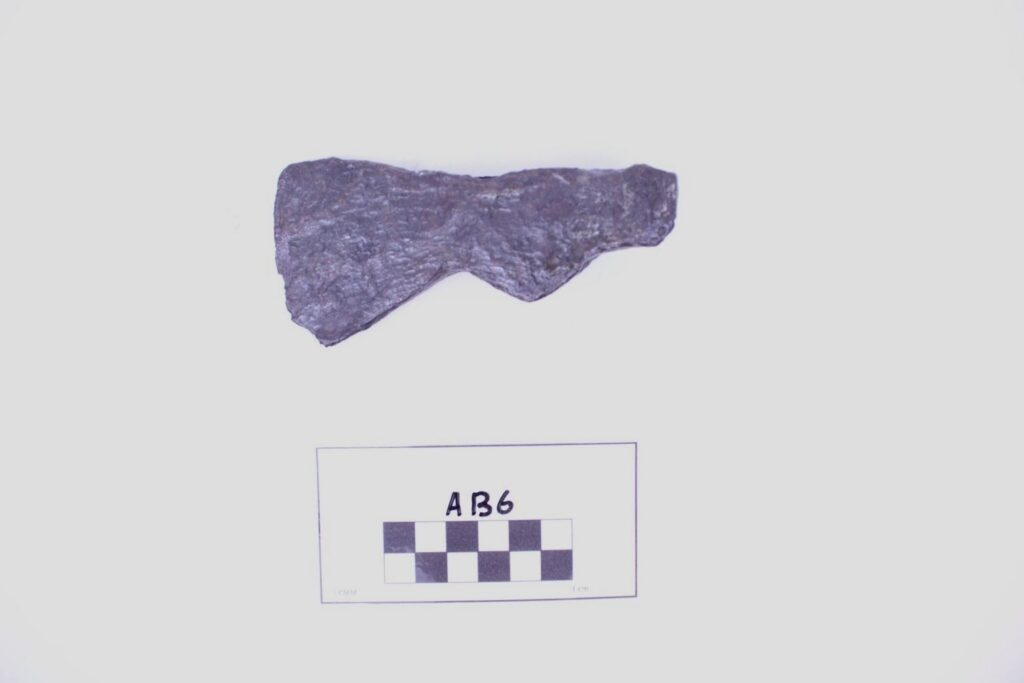
The Patriots on Lake Champlain built and maintained over a dozen ships using hatchets just like this one. Made from cast iron, this hatchet might’ve been one of many made to supply the Patriots with the tools required to build much of their fleet from scratch at Skenesborough (now Whitehall, NY).
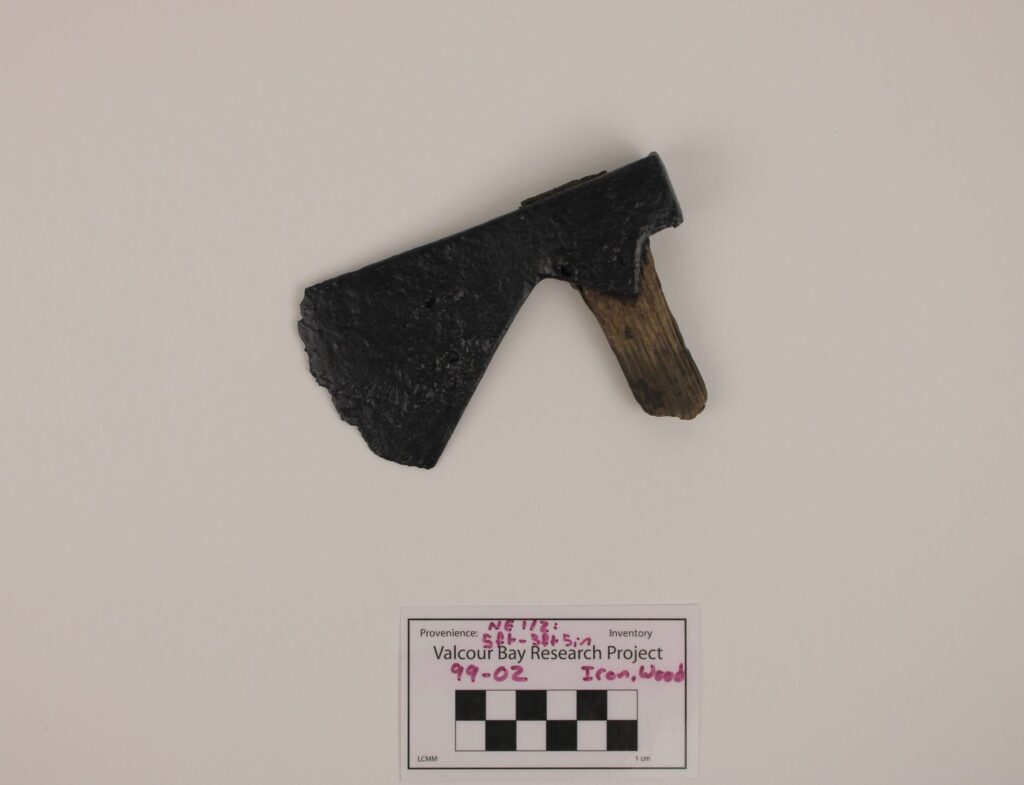
This artifact was recovered by Bill Leege, an instrumental leader of the Lake Champlain Archaeological Association. Bill collected hundreds of artifacts from Arnold’s Bay in the 1960s. Many tools similar to this one have been recovered, including another hatchet from Arnold’s Bay and the head of an iron belt axe we found at Valcour Bay with part of the wooden handle still attached! This suggests that these axes could’ve been used as tools or as a way for soldiers to defend themselves during battle.
Pewter Spoonhead
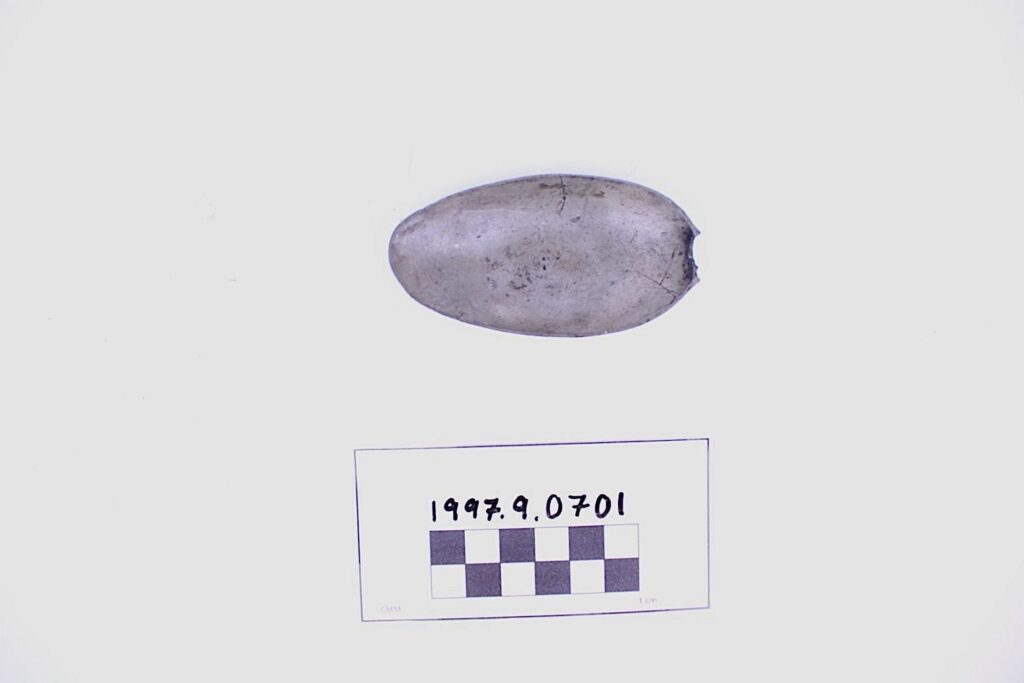
This small, broken artifact gives us a fascinating hint into the daily lives of people in the eighteenth century, and how they may have unknowingly poisoned themselves a little bit with every meal. This spoon head is made from pewter, a very common alloy at the time made from mixing two metals: tin and lead. Today, pewter no longer contains lead – copper or antimony is used instead – but people at the time were unaware of the toxic properties of lead, meaning that by using this spoon the owner might’ve been damaging their body unknowingly.
Pewter was especially common in the eighteenth century because it was cheaper than silver, meaning much of the burgeoning middle class could afford it. It wasn’t easy to make pewter in America, as the British didn’t allow for its import. People could only import finished pewter items from England. So many craftsmen recycled used pewter items to melt down and use to craft new items. This cottage industry of reusing pewter imported from England connected America to a broader, globalized trading network.
This little spoon, with its stem separated from its head long ago, shines a light on a material that many Americans used to use in their daily lives. It shows us the ways a small detail, such as the spoon being made from pewter, can inform us about eighteenth century life.
Thanks for joining us again to explore some of our favorite objects!
If you would like to take a closer look at these three objects, or any other objects in our collections, follow the links below to explore our digitized collections where we have archived many more stories!
- Link to the Inkwell and Pen: https://hub.catalogit.app/lake-champlain-maritime-museum/folder/lake-champlain-archaeological-associates-arnolds-bay/entry/inkwell-and-pen
- Link to the Hatchet Head: https://hub.catalogit.app/lake-champlain-maritime-museum/folder/lake-champlain-archaeological-associates-arnolds-bay/entry/hatchet-head-1
- Link to the Hatchet Head in slightly worse condition: https://hub.catalogit.app/lake-champlain-maritime-museum/folder/lake-champlain-archaeological-associates-arnolds-bay/entry/hatchet-head
- Link to the Belt Axe: https://hub.catalogit.app/lake-champlain-maritime-museum/folder/valcour-bay-research-project/entry/belt-axe
- Link to the Pewter Spoon: https://hub.catalogit.app/lake-champlain-maritime-museum/folder/lake-champlain-archaeological-associates-arnolds-bay/entry/pewter-spoon-head
- Link to all our digitized collections: https://hub.catalogit.app/lake-champlain-maritime-museum
PS We’re always looking for more information! If you have more context to share about any of these items, please don’t hesitate to reach out to us at info@lcmm.org.