
By Museum Collections Staff
Did you know that Lake Champlain Maritime Museum serves as the home and repository for archaeological materials from many of the underwater sites and shipwrecks in Lake Champlain? More than half of our collections come from archaeological beneath the lake—and many are owned by the State of Vermont or even the U.S. Navy.
Over the last 18 months, the Museum’s Collections team has been busy behind the scenes, undertaking a comprehensive inventory of all our collections – both archaeological materials held on repository and items donated directly to the Museum. This work is a big step toward making information about the artifacts in our care more accessible to the public.
Lake Champlain’s most common type of shipwreck is the canal boat. Described as the “tractor trailers of the nineteenth century,” these vessels were essential to ensuring the commercial goods like lumber, stone, and brick produced around the Champlain Valley made their way to growing cities along the canal system before trains and trucks were around. As a result, some of our largest archaeological collections come from the canal boat wrecks scattered across the lake bottom. You can explore these stories in our exhibit “Underwater Archaeology: Diving into the Stories of People and Canal Boats on Lake Champlain,” but even while the Museum is closed for the season, there’s now a new way to dive in: our canal boat collections are online!
This fall, the Museum’s Collections team documented, rehoused, and made digitally available 932 artifacts related to canal boats on Lake Champlain. We’re excited to share three of these collections with you:
O.J. Walker Collection: The O.J. Walker Collection documents the archaeological investigation of a 1862-class sailing canal boat resting 65 feet underwater in Burlington Bay, along with a collection of artifacts and field notes documenting research and excavation of the site beginning in the 1980s. Built by shipwright Orson Spear and named for freight businessman Obadiah Johnson Walker, the vessel operated for 33 years during some of the busiest years for canal boats on the lake, including a notable period when it was commanded by Mrs. Rock, the only known woman to captain a commercial canal-going vessel on Lake Champlain at the time. Together, the well-documented historical record and preserved underwater remains make O.J. Walker an exceptional window into nineteenth-century canal commerce and the lives of those who worked aboard these boats.
General Butler 1985 Collection: General Butler was an 1862-class sailing canal boat that now rests in Burlington Bay and has been carefully studied through decades of archaeological research and documentation by the Museum. The collection includes hundreds of artifacts and thousands of records that illuminate daily life aboard the vessel, from cargo and cookware to personal items, while many large features remain preserved on the lake bottom as a protected underwater historic site (actually, all these wrecks are part of the Lake Champlain Underwater Historic Preserve System, which registered divers can visit during the dive season!). The Museum also interprets the story of its dramatic 1876 sinking and heroic winter rescue through our annual James Wakefield Rescue Row, a rowing race for local high school students.
Sloop Island Canal Boat Collection: The Sloop Island Canal Boat Collection documents the Museum’s 2002-2003 excavation of an unidentified canal boat near Sloop Island and Charlotte, VT, including over 300 artifacts and extensive records. Artifacts of note include a sample of the coal cargo the vessel carried when it sank; damaged pieces of a man’s wool coat; a gasoline torch; and a stove leg, along with several hundred pieces reflective of a domestic living space, including dishware, flatware, alcohol bottles, and a corkscrew. Recovered archaeological artifacts were conserved in-house at the Museum. The nature of these objects reveal that a man, woman, and at least one child were living on board the vessel when it sank. Fortunately, there was no evidence that anyone perished in the accident. These materials offer an intimate glimpse into the lives of canal boat families on Lake Champlain, even as the vessel’s identity remains a mystery.
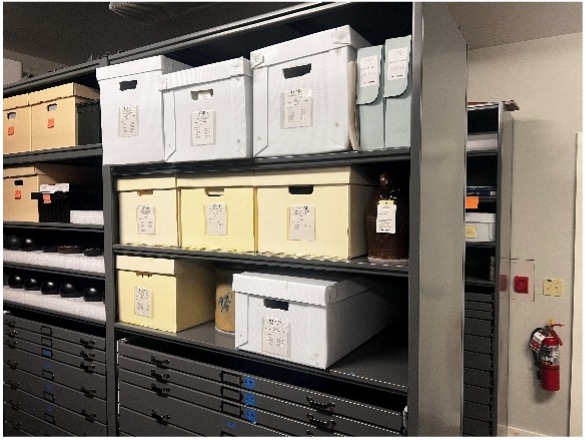
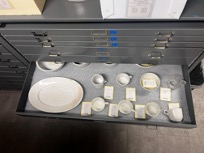
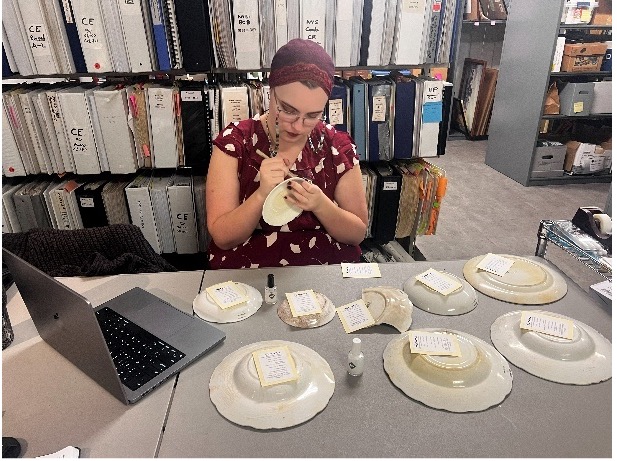
Making these collections available online was a big undertaking. The process involved photographing, rehousing, and updating inventory information for each artifact. The team also collated decades of field notes, archaeological reports, photographs, and conservation records to bring everything together in one searchable place. Along the way, these artifacts were moved from their old storage location to a newly renovated collections space and rehoused in boxes, trays, and drawers (depending on size and material type) using archival grade materials to ensure their long-term preservation.
Here are some photos from the team at work:

We’re publishing our collection online through CatalogIt, an online Collections Management System (CMS) that helps museums care for their collections internally while also making them visible to the public. The CatalogIt HUB is the interface used to make these internal collections viewable to the public. Affectionately described by Museum staff as a perfect blend of Excel and Instagram, CatalogIt displays primarily as a photo archive, allowing users to browse images and click through for historical context and object details. Earlier this year, we listed the Valcour Bay Research Project Collection and the Ernest Haas Collection online using this tool. And going forward, we look forward to sharing more collections, including artwork, artifacts, and maps, with all of you!
We hope you’ll take some time to explore these canal boat collections online – and discover the stories they tell about work, family, and life on Lake Champlain.
Thanks for this. Look forward to perusing the collections – particular the Valcour Island material
Gene Porter