
By Meghan Hill Bartholomew, Educational Programs Manager
Ten teenagers spent a day at Lake Champlain Maritime Museum’s Teaching Forge this April, learning the traditional skills of blacksmithing. Blacksmithing requires both strength and patience as one heats and hammers a piece of metal into shape in a process called forging. These young people stepped out of their comfort zone and rose to the challenge of learning a new skill. While this process was new to them, metalworking and hand-crafting tools are ancient traditions that span thousands of years of human culture.
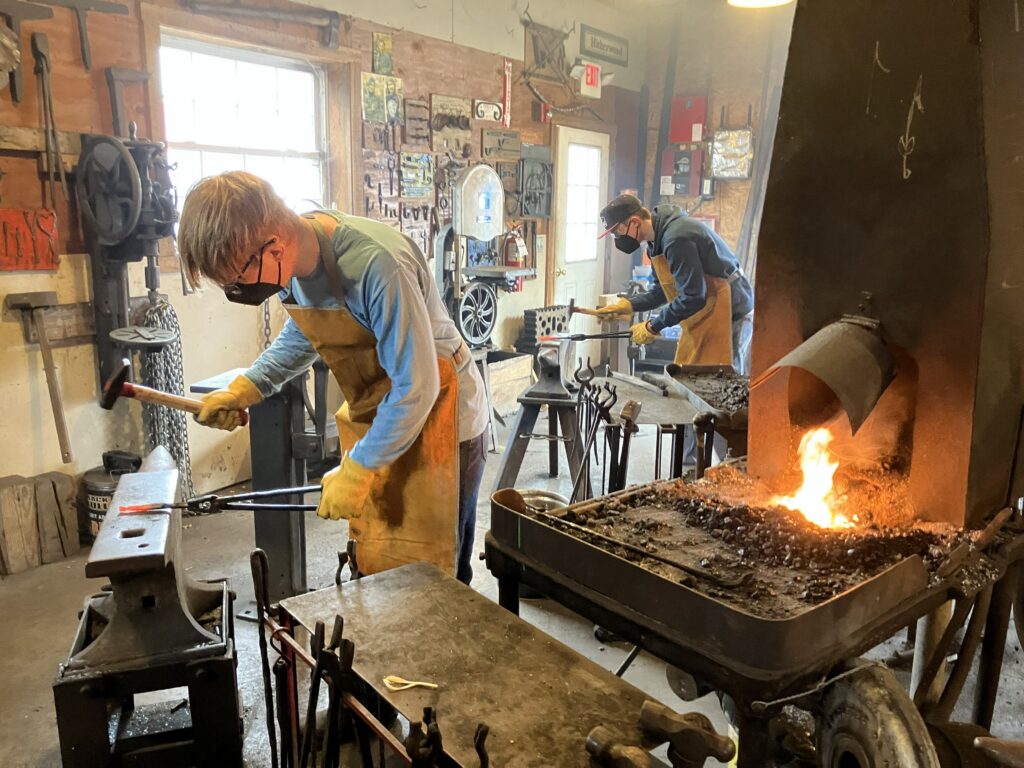
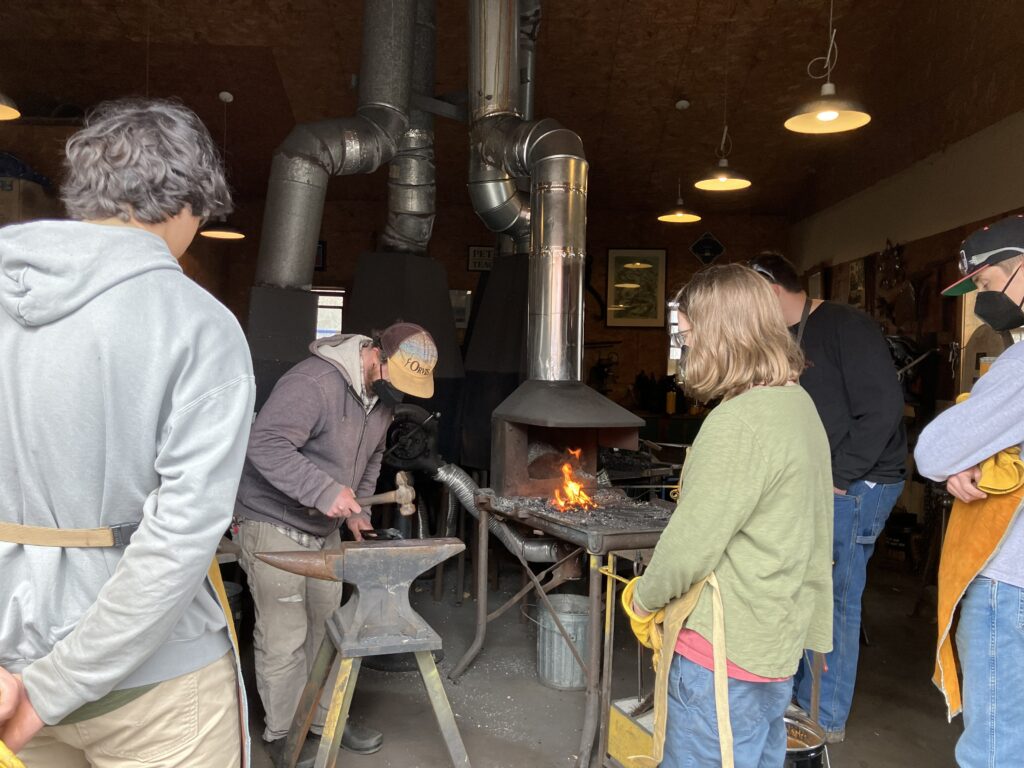
Left: Two teens create hand-forged iron screwdrivers during a class. Right: Instructor Dylan Verner demonstrates the start of a “squirrel tail” spiral on a metal scribe.
The ability to work metals has been an important force in the shaping of human culture and technology, a process which started with the discovery of copper approximately 7,000 years ago. The Copper Age saw many advancements in human technology and art with the creation of projectiles, statues, and jewelry. A little over 5,000 years ago, humans discovered that they could create a stronger metal by mixing copper with tin to make bronze. The Bronze Age saw great advancements in both tools and weaponry because bronze is stronger and less brittle than copper. Next came the Iron Age, which gave us much of the foundation of modern technology with metal that was even stronger than bronze and able to hold a sharp edge.
This history isn’t something that’s far removed from us here in the Champlain Valley; it’s incredibly relevant to our local history. Blacksmithing was an important trade skill in the early American Colonies, and hand-forged objects played an important role in our local history. Items forged by blacksmiths were used for farming, in homes, and on the battlefields of the Revolutionary War. Not only were there forges active throughout our region, iron was also mined along Lake Champlain. On the New York shore of Moriah, there was a thriving iron mine from 1820 until the mine closed permanently in 1971. Millions of tons of iron were mined here and exported to companies throughout New England and the Midwest to be made into nails, horseshoes, railroad parts, and much more.
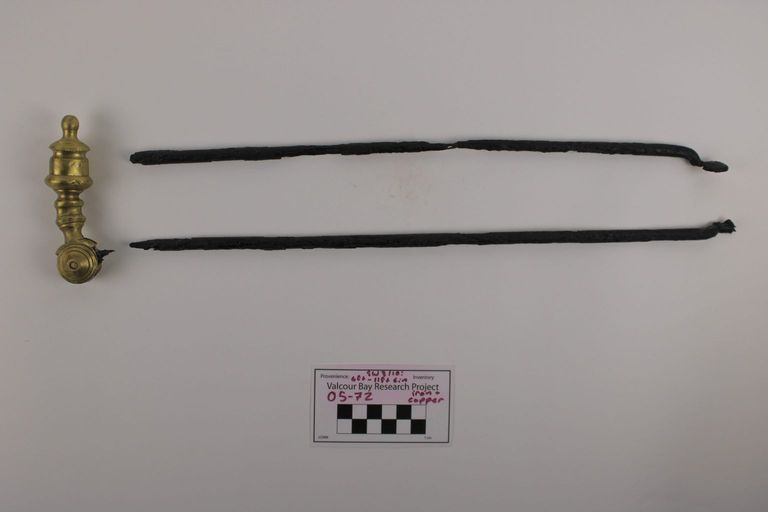
Some may wonder why it’s important to learn a traditional skill like blacksmithing in our modern era when a vast majority of our possessions are mass-produced. Learning to work metal is a great learning experience for young people because it teaches persistence and attention to detail. Additionally, we still need people to maintain forged items such as gates, hardware, and fireplace tools. Without skilled blacksmiths to repair them, these ironworks lose their longevity and must be replaced by mass-produced alternatives. Educating young blacksmiths in the art of hand-forging keeps traditional skills alive to ensure that cultural knowledge isn’t lost to future generations.
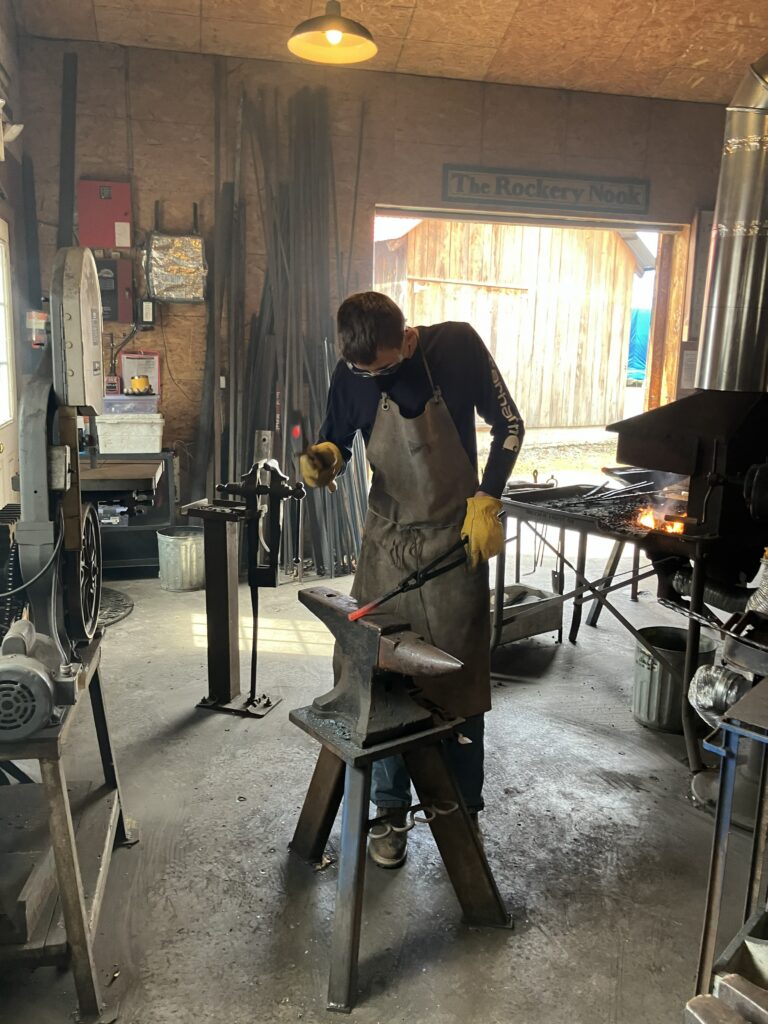
A teenager hammers a piece of iron during a recent class in our teaching forge.